


“Bees are chaotic but perfectly organised”
I came into beekeeping through a Christmas present – about 10 years ago, my girlfriend at the time signed me up for a course, and I was hooked almost immediately. There’s something pretty special about bees – they’re chaotic, but still perfectly organised at the same time.

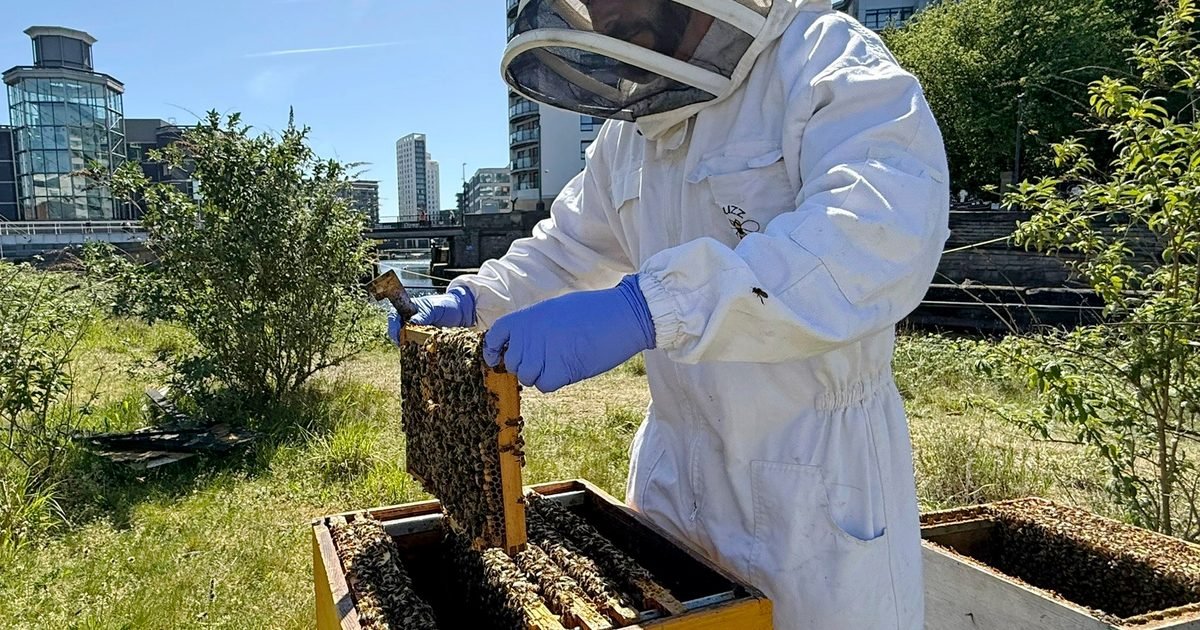
Four years ago, I founded Band Of Bees after noticing that more workplaces wanted to host hives, but didn’t have the time or knowledge to look after them. Now, Band Of Bees installs hives on rooftops, balconies, courtyards and green spaces – including at Leeds Dock, where 40,000 bees live on Fearns Island in the middle of the River Aire.

What I love is how quickly the connection begins: you put bees in place, and the next day, they’re flying. Unlike many environmental projects, there’s no huge infrastructure change. Suddenly, people are looking differently at the plants around them, the flowers in the city and the food in their kitchens. Honey is one of the best ways to understand that – urban honey can taste completely different from countryside honey, because bees are foraging from such a varied mix of gardens, street trees, parks and even plants along railway lines. Those nectar sources change throughout the year, so the honey changes, too. Sometimes, it’s floral and light; other times, it’s richer, darker and more complex. Cut straight from the hive, honeycomb has this wonderful texture – waxy, golden and sweet – and, at Leeds Dock, it’s used by Fearns bistro in a dessert.
For me, that’s where the magic lies: bees pollinate a third of the food we eat, but they also make people stop, taste and notice. Beekeeping is good for biodiversity, but it’s also good for people. It connects us with nature, even in the middle of a city.

- Start by looking at the space you already have. Quiet green corners, rooftops, balconies and courtyards can
all become homes for bees if they’re properly managed. - Think about people as much as the pollinators. A hive can be a brilliant way to help colleagues, neighbours or customers connect with nature and understand where their food begins.
- Get expert support – bees need regular care, especially in busy urban places, so make sure hives are installed and maintained responsibly.
- Taste the honey and share it. Jars can be given to staff, used as raffle prizes or brought into the kitchen. Honeycomb cut straight from the hive is a beautiful reminder of the work bees do.
- Most importantly, stay curious. Bees tend to have a way of changing how you see a place – the flowers, seasons and the food on your plate.
Local Heroes stories are produced in collaboration with the Local Storytelling Exchange
Get inspired
Honey recipes
Is honey good for you?
Honey-roast beetroot
Honeyed winter salad
Clementine & honey couscous
Honey-mustard steamed green medley
