



By Con Raso, Managing Director, Tuned Global
Music and technology leaders at Tuned Global, Endel and Bluesound Professional discuss intersection of art, tech, wellness and music.
The intersection of music and wellness is not new, but the shape of it is changing quickly.
Femtech innovation is evolving fast, and the decisions innovators make around content, technology, and licensing are creating a genuinely new kind of music business.
This space was explored during a panel at the 2025 Music Tectonics conference in Santa Monica, with other companies whose approaches to wellness music share very little in common beyond the category label.
The session, moderated by Andrew Stess, Head of Sales and Business Development for North America at music cloud platform Tuned Global, drew out a conversation between Graeme Harrison, Vice President & General Manager of Bluesound Professional, and Marina Guz, Chief Commercial Officer with Endel.
Stess opened with a deliberately broad question: what is wellness? The answers illustrated just how wide the category has become.
For context, Bluesound Professional makes networked audio hardware deployed across a range of environments, from gyms to hospitals to corporate offices.
The company works with services including Composure, which targets sleep improvement for people with dementia, and MoodSonic, which applies biophilic soundscaping to workplace environments.
“Wellness is different things to different services,” Bluesound Professional’s Harrison said.
“Fit Radio would look at wellness as being gyms and exercise and that sort of thing. Composure is about helping people with dementia, specifically sleep, go to sleep and stay asleep.
“With MoodSonic, wellness is all about the well workplace, getting well-certified and employee engagement, creating activity-based work where you can go to different areas of a workplace to achieve what you want; focus, relaxation, creativity, whatever.”
Endel’s Guz came at the question from a different angle.
The company generates AI-powered soundscapes for focus, relaxation, sleep and meditation, each personalised to the user’s biometric inputs.
“Can you sleep? Can you deal with stress? Are you grounded? What’s your general mindset towards things?” she said. “That’s what Endel is trying to really help you with.”
Art, Tech and Science

Marina Guz
For Endel, the music model is a little different from other music businesses.
Every soundscape is generated in real time, drawn from stems produced by Endel’s internal composers or in collaboration with external artists, and assembled dynamically based on user inputs including heart rate, time of day, weather, and movement.
“We always like to say we live at the intersection of tech, art, and science,” Guz said.
“The team has gone out and done a lot of research, we collaborate with a lot of scientists and researchers in the space to really understand what kind of sounds we need to play for you to fall asleep vs stay asleep vs when you wake up.”
The company’s founding team had musical backgrounds, including a neoclassical composer who has released on Decca, and a CEO whose deep interest in Brian Eno shaped the company’s foundational approach.
That grounding in composition distinguishes Endel’s output from what Guz sees as the broader wellness music category on streaming platforms.
The company’s first major artist collaboration was with Grimes. Since then it has worked with James Blake, Miguel, and others, building soundscapes that carry an artist’s sonic identity while adhering to scientific guidelines for the intended use case.
Endel was also, according to Guz, the first AI music company to sign deals with Universal Music Group and Warner Music Group.
The personalisation goes further than most listeners would expect.
Two people pressing play on the same Endel soundscape at the same time will hear different outputs, because the system continuously adapts to each user’s biometric state.
“If you and I, we’re in different locations, different age, different sex. Maybe you’re sitting down and walking around at different heart rates. Your soundscape will sound different than my soundscape because it will get personalised to the inputs that you give it,” Guz said.
“No track, no soundscape is ever the same in the app. It always gets generated on the fly for you in the moment based on the inputs.”
Hardware, Artists, and the AI Problem
Stess, whose work at Tuned Global is built around helping fitness, wellness and other companies navigate the complex music streaming and licensing space, steered the conversation toward implementation. The theory was covered.
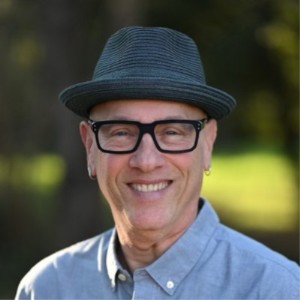
Andrew Stess
What does the infrastructure look like in practice, and where do artists fit in it?
Harrison brought up the delivery layer, something the panel hadn’t dwelled on yet.
Bluesound Professional makes networked audio hardware that sits at the endpoint of everything the other two companies build, and there’s more going on there than the word “hardware” suggests.
Their devices are individually addressable network speakers, which means a service like MoodSonic can pull in real-time occupancy levels, temperature, and time of day to shift a workplace soundscape on the fly.
Their work with Composure goes further, using pillow sensors to measure sleep quality in dementia patients and adapting the audio output accordingly.
Harrison also raised something that landed quietly in the room: Model Context Protocol.
Developed initially by Anthropic and later adopted by OpenAI, Microsoft, and Google, it’s a standard that lets agentic AI communicate directly with connected devices.
When he asked who in the audience knew what it was, only a handful of hands went up.
“It completely subverts the controller interface,” he said.
“That means that we can control all of our devices via our AI agent of choice.”
On the question of where artists fit, Stess put it directly: how do you build something sustainable in wellness? Guz’s answer was blunt.
Much of the wellness streaming world runs on ghost producers and fake artist profiles built to generate playlist placements rather than careers.
“It’s all kind of ghost producers, fake artists that populate these playlists,” she said.
“On that side of the world, there can still be a lot done to promote more artists who want to actually move into the space.”
Endel is now launching Sources, a label dedicated to artist-centric wellness music, signing neoclassical and ambient artists who make the music but lack the platform.
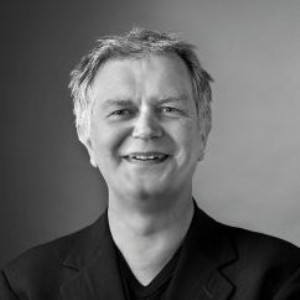
Graeme Harrison
“We are signing just small artists, because there are a lot of amazing neoclassical artists who make music in the space, but they don’t really have a platform,” Guz said.
“We’re launching something that is really just humans making music for the space, no science, no tech, no anything, because that’s what’s really missing, at least on the streaming side of the business.”
Guz also flagged a complication specific to Endel.
The company has worked with AI since before it became a loaded term, and that history has become a liability.
The early collaborations with Grimes, James Blake, and Miguel drew real attention when generative soundscapes with named artists were still a novelty.
That novelty has since been swamped by a flood of low-effort AI-generated content filling wellness playlists across every major platform.
“AI is associated, especially in the wellness space, with slop,” she said.
“So much content, cover artwork, is being generated, and everything looks terrible and a lot of it sounds terrible, and so we are being grouped into that same thing, even though we’re really not [that] at all”
The questions the panel kept returning to, around licensing, metadata, artist engagement, and the AI content quality problem, are the sort Tuned Global works through with clients building music into health and wellness products.
The wellness music space is growing, the licensing challenges are real, and the opportunity for artists willing to engage seriously with it is there.
The infrastructure, whether hardware, soundscape technology, or a fitness platform’s back end, is further along than most of the music industry has noticed.
About Con Raso, Managing Director of Tuned Global
Con Raso is an entrepreneur passionate about innovation, new technologies, and start-ups.
Over the last few decades he has focused on creating innovative mobile and online distribution models within the B2C entertainment market, enabling brands to utilise music as a marketing tool, via unique customer engagement strategies.
Being inherently well-versed in both technology and music, Con ensures our solutions are aesthetically pleasing, engaging and disruptive.
About Tuned Global
Tuned Global is the data-driven music cloud platform that empowers businesses to integrate commercial music into their apps and launch complete streaming experiences using advanced APIs, real-time analytics, licensing solutions, rights management systems, Ai-enabled music discovery, and customisable white-label streaming apps.
Our turnkey solutions for music, audio, and video — coupled with advanced AI capabilities and a broad ecosystem of third-party music tech integrations — make us the most comprehensive platform for powering any digital music project.
We streamline complexities in licensing, rights management, and content delivery, enabling rapid innovation and bringing new ideas to life. Since 2011, we’ve supported 40+ companies in 70+ countries — across telecom, gaming, fitness, health, media, aviation, and more — to deliver innovative music experiences faster and more cost-effectively.
Learn more at tunedglobal.com

