


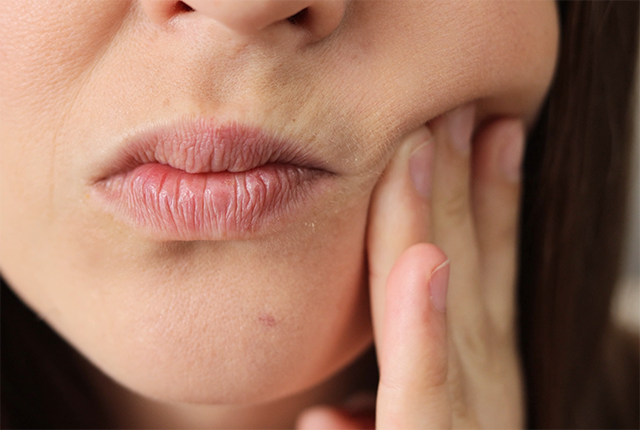
Oral cancers are relatively rare, and historically more common among men over 60 who have used tobacco and alcohol regularly. But rates of these cancers have been slowly rising among younger people, women in particular, who have never smoked.
That trend prompted researchers to analyze whether people’s diets might play a role. Their newly published findings suggest that women who eat less-healthy diets appear to have a higher risk of developing oral cavity cancer, involving the mouth, tongue and lips.
Surprisingly, this association was even stronger among people with little or no alcohol and tobacco use. What’s more, no parallel risk increase was seen among men in the study, the largest of its kind to examine how adult dietary patterns relate to oral cavity cancer over a years-long span.
The findings appeared May 13 in the journal Head & Neck.
“It seems that, globally for women, if you have a poor diet, you’re at higher risk for getting oral cavity cancer. Counterintuitively, that risk increase appears higher for women who don’t smoke or drink alcohol,” said Dr. Brittany Barber, the paper’s lead author. She is a head and neck surgeon and an associate professor at the University of Washington School of Medicine.
Rich longitudinal data sets
The researchers analyzed data from more than 210,000 participants across three long-running U.S. health studies: the Nurses’ Health Study, Nurses’ Health Study II, and the Health Professionals Follow-up Study. For up to 30 years, participants were studied for risk factors of major chronic diseases. Diet quality was assessed via food questionnaires every four years.
Participants’ responses were aligned with two dietary patterns and one dietary measure:
- Prudent diet: higher in fruits, vegetables, whole grains, legumes and fish
- Western diet: higher in red and processed meats, refined grains, desserts and sugary drinks
- Alternative Healthy Eating Index: a scoring tool that rates diet quality based on food intake
Over the study period, 226 new oral cavity cancer cases were identified: 124 in women and 102 in men.
Oral cavity cancer risk amplified for women
Among women with mean baseline age of 43, those with the lowest adherence to the Prudent diet pattern had a nearly twofold higher rate of oral cavity cancer than women with the highest adherence. Women with the lowest (poor) scores on the Healthy Eating Index had a roughly twofold higher rate of these cancers than those with the highest (healthy) scores. The pattern held after accounting for smoking, alcohol use and body weight.
The association was notable in a subgroup of women who were nonsmokers, light smokers, nondrinkers or light drinkers. In that group, low adherence to the Prudent diet pattern was associated with roughly a threefold higher rate of oral cavity cancers than participants with better adherence.
This suggests that, for some women, diet quality is a meaningful risk factor even in the absence of traditional exposures like tobacco and alcohol.
“It seems that there’s a susceptible group of women who have an even higher risk of getting oral cavity cancer, and they likely have another risk factor that we don’t understand or don’t know about,” Barber said.
The investigators were surprised to find no statistically significant associations between diet and oral cavity cancer risk among men, “who typically eat more processed meats than women,” she added.
Understanding the increased risk
The authors emphasized that oral cavity cancers are relatively rare and the absolute baseline risk is low. The risk seen in the study is two additional cases per 100,000 people.
People who develop oral cavity cancer have a five-year survival of 60% to 80%, depending on the stage of disease at diagnosis. Those percentages have improved little in the past 30 years, Barber said.
Given the rise in incidence among women without traditional risk factors for oral cavity cancer, diet quality may be a modifiable risk factor worth examining further, she added.
This study was supported by grants from the National Cancer Institute at the National Institutes of Health (UM1 CA186107, P01 CA87969, and UM1 CA176726).
For details about UW Medicine, please see our About page.
