


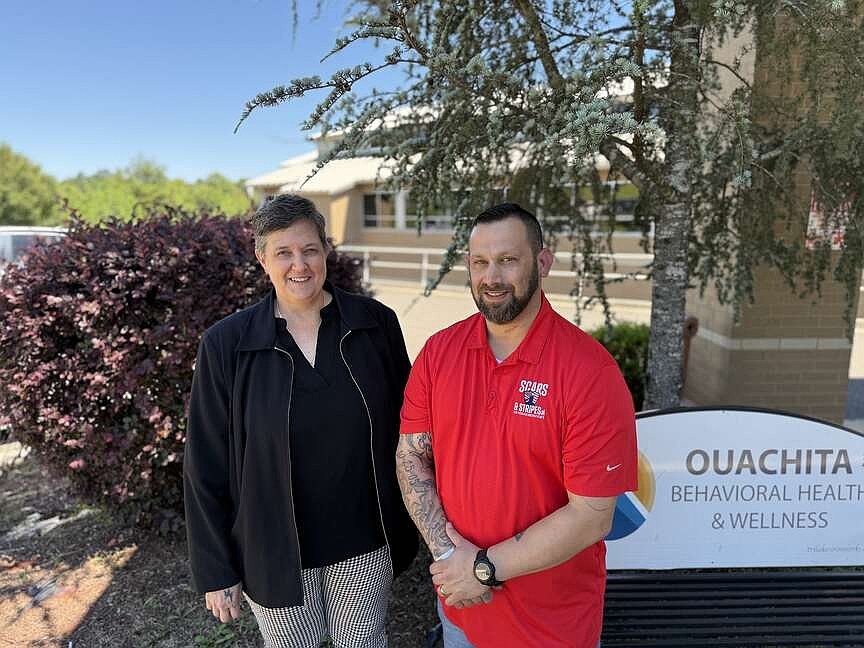
Ouachita Behavioral Health and Wellness has partnered with Arkansas veterans organization Scars and Stripes to better serve the veterans in Garland County.
OBHAW is the oldest mental health provider in the area and provides mental and behavioral health services to five counties in Southwest Arkansas across four locations. OBHAW Clinical Director Michelle Kveum said partnering with Scars and Stripes seemed natural, due to Scars and Stripes’ focus on veterans’ wellbeing.
“It was the most natural connection,” Kveum said. “We found a partner with a passion for helping veterans, and OBHAW has historically been all about helping our community members get the best possible care they can.”
Scars and Stripes is an Arkansas-based nonprofit organization focused on supporting veterans by addressing suicide prevention, homelessness and navigating Veterans Affairs benefits. Scars and Stripes Executive Director Jared Eakin said the role mental health plays in both organizations motivated the partnership.
“My whole mission is suicide prevention by addressing the life stressors that come up, before it turns into crisis,” he said. “Let’s address everything that may come up, and mental health is a part of that. Not all veterans want to go to the VA all the time, or it may be a waiting time when they need it right then. And OBHAW has great therapists that can assist and have been assisting, so it really was natural.”
Eakin said the goal for Scars and Stripes is to act as a second line of defense for veterans who might fall through the already-available support programs for veterans.
“I want to fill in the gaps with all the services,” Eakin said. “There’s plenty of services out there. The problem is veterans are still falling through the gaps of those programs. I’ve worked for different VA programs, but there’s always a little something that a veteran couldn’t get out of that program. So by stepping up and being able to try and address those things, I feel it’s really helping with the suicide prevention side of things by addressing things before they turn into crisis.”
According to Veterans Affairs, in 2024 veterans between the ages of 18-34 committed suicide at a rate of 47.6 per 100,000 people. This rate is higher than the average suicide rate for those in the same age bracket who have not served in the military in the United States, which is about 13.7 per 100,000 people.
The rates are significantly higher than average across every age bracket for veterans. For the national average, suicides among men greatly exceed those for women, but for veterans, suicides actually occur more among women than men.
“A big issue with veteran suicide and veterans in general when they’re getting out is that transition from the military and the loss of camaraderie,” Eakin said. “Veteran isolation leads to a huge issue. What I try to do is whatever the issues they’re having, things that need to be addressed, I go through it with them so they know they have someone going through it and that they’re not alone.”
Kveum said that OBHAW had already been working with veterans, but having a partner with more experience in the care of veterans will improve their own care for veterans.
“Our expertise was more in working with military families,” she said. “But having a partner that has specific history, specific training and skill related to veterans makes it easier to work with the veterans themselves and understand their issues better. They fill in the gaps by understanding how the VA works and how to get through the referral process and the unique needs that veterans have.”
The partnership also provides Scars and Stripes with access to OBHAW’s links to Projects for Assistance in Transition from Homelessness, or PATH.
“With this partnership, we have links to resources such as our PATH program for housing assistance and, of course, the much needed therapy and access to medication management,” Kveum said. “The PATH program is a state-funded program that provides housing. It’s a project to help people that are unhoused find a stable way to transition to being housed.”
Another major help that Scars and Stripes will provide to veterans through OBHAW is simply navigating the VA benefits, so veterans don’t have to attempt to do it alone.
“It’s not always homeless veterans; it could just be benefit navigation,” Eakin said. “They’re just feeling overwhelmed because the VA system is so overly complex they don’t know where to start. It happens more often than you’d think where a veteran just forfeits trying to get care because they feel that it’s overly complex to try.
“I work closely with the VA and many different departments within the VA, so I understand how it works. Veteran healthcare and insurance and how it’s covered is not like you’d think a normal insurance is,” he said. “There’s not a card. There’s not a ‘Oh, you’re eligible for this.’ It’s different for different veterans.”
Eakin said benefits depend on the severity of a veteran’s disability. Those that are 100% disabled are eligible for dental and vision coverage, but that’s only for those specific veterans. Eakin said he’s applied for a grant to fill in the gaps for other veterans who won’t receive those benefits. Scars and Stripes also tries to cut through the red tape for civilian medical providers when a veteran uses their services and tries to use VA coverage.
Kveum said these difficulties within the VA have been a problem for OBHAW.
“From our side, when we tried to contact the VA, it’s hard to know who to contact for your needs, how to get the authorization and where to even start,” she said, noting any veteran with questions about their benefits, or who just wants help, should reach out.
“We’re here if they want to know more about how they can continue to serve with an organization like Scars and Stripes,” she said. “Jared’s always looking for people to come and help get the word out that our veterans do not have to do this alone.”
