


Campus recreation leaders share how departments are evolving wellness and recovery offerings to support student well-being through flexible spaces, recovery services and holistic programming.
Wellness and recovery offerings have existed within campus recreation for years, but for many departments, they’re no longer viewed as supplemental amenities. Instead, they’re becoming central to how campus rec supports the overall student experience.
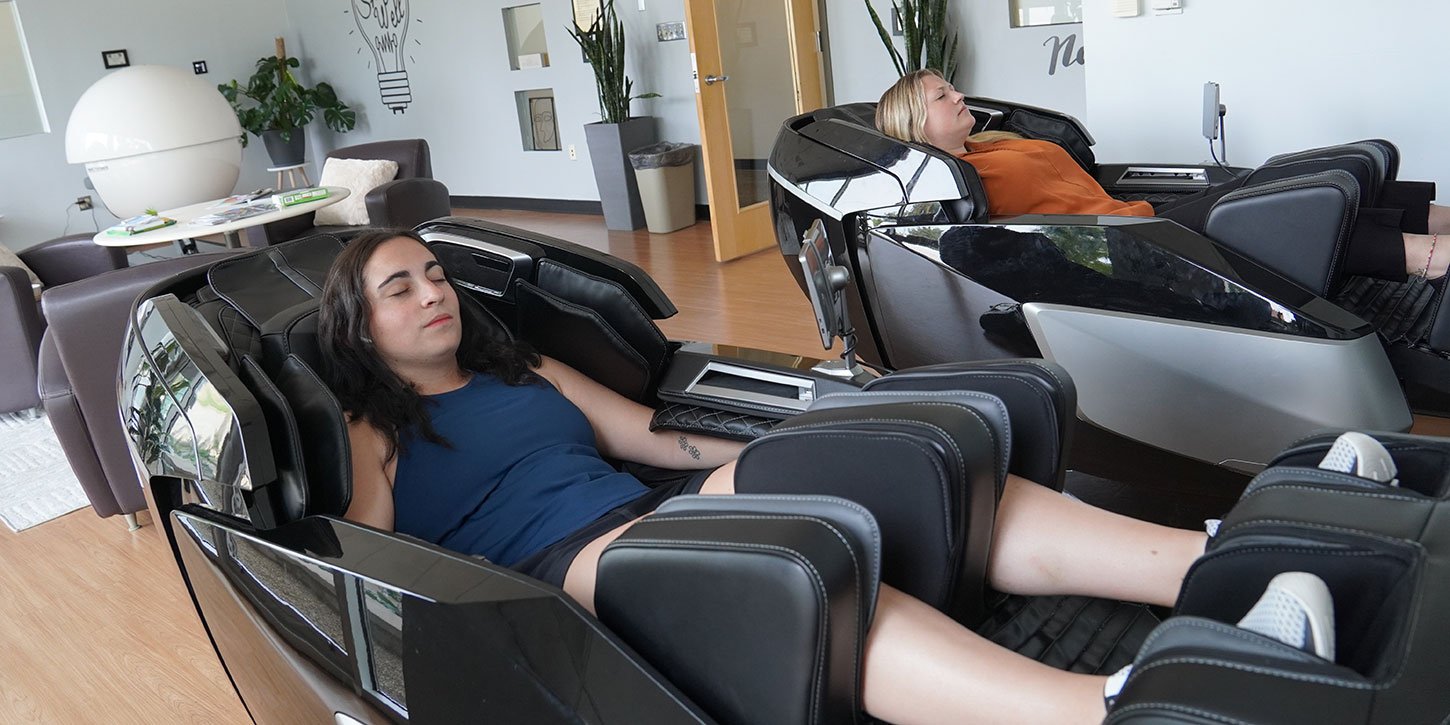
From stress-management programming and mindfulness initiatives to recovery spaces equipped with massage chairs and compression therapy tools, departments are broadening their definition of wellness beyond traditional fitness. Many are adapting facilities, staffing models, and programming strategies to meet evolving expectations from both students and upper administration.
Leaders from Cleveland State University (CSU) and the University of Missouri–St. Louis (UMSL) alongside industry partner Human Touch share insights into the current state of wellness and recovery within campus recreation, the operational challenges departments are navigating and where they see the future of holistic wellness on campus heading next.
Moving from Traditional Fitness to Holistic Wellness
For many teams, demand for wellness and recovery services has increased dramatically since the COVID-19 pandemic.
Michelle Reiger, the director of Programming and Operations at CSU, said she believes the pandemic changed the way students and institutions view health, self-care, stress management and overall well-being, especially as students returned to campus with elevated levels of anxiety, burnout and fatigue.
“As a result, colleges and universities were forced to elevate the importance of spaces, programs and services that support holistic wellness, not just academic achievement and physical fitness,” explained Reiger.
Broader cultural trends have also helped normalize wellness and recovery practices among college students. Social media, wellness influencers and wearable technology have made offerings like stretching, mindfulness and guided recovery more accessible.
According to Danny Provencio, the senior assistant director of Programs at UMSL, students are also thinking more about longevity — another aspect of well-being heavily influenced by social media.
“Services like stretch therapy and coaching are evidence that wellness and recovery are being taken more seriously by today’s student population,” said Provencio. “Students are becoming more intentional about maintaining healthy bodies and prioritizing long-term well-being.”
As wellness becomes a greater priority for students, departments must continue evaluating evolving expectations and listening to member feedback.
What Students Are Looking For and What Departments Are Prioritizing
Students today are increasingly seeking accessible and flexible wellness experiences.
Popular recovery offerings that students can integrate easily into their routines at CSU include massage chairs, stretching aids and foam rollers.
At UMSL, Provencio said offering chair massages during special events has been especially well received by students. The department has also prioritized creating spaces that support overall well-being beyond physical fitness.
“In addition to traditional recreational programming, we offer resources such as coloring books, puzzles and board games,” said Provencio. “In the past, we’ve provided sleeping cots for students who needed a place to rest between classes.”
Reiger said she has also seen students gravitate toward guided recovery through digital platforms and apps, a trend also noticed by Jacqui Gonzales, the director of Commercial Key Accounts at Human Touch.
“Today’s students appreciate seamless, tech-enabled wellness from app-based workouts to intuitive equipment,” explained Gonzales. “The demand is for convenient, independent experiences that fit into busy academic schedules.”
The shift is not only influencing the types of programs departments offer but also how wellness spaces themselves are being designed.
Designing Spaces for Wellness and Recovery
As wellness and recovery become larger priorities, many teams are rethinking how existing facilities can better support these initiatives rather than building entirely new spaces.
“Departments are utilizing underused spaces in existing facilities as dedicated recovery zones as well as integrating wellness and recovery elements into fitness areas,” said Rieger. “Design considerations include flexible layouts, calming aesthetics and multipurpose functionality in order to maximize precious space.”
Provencio said the team at UMSL has discussed converting its personal training suite into a sensory or recovery room to better support student needs.
Common additions he’s observed include meditation zones, massage chairs, nap pods and dedicated areas for services like stretch coaching or compression therapy.
Design flexibility has also become a major consideration as departments work within space constraints.
“Facilities are shifting toward adaptable environments that support everything from strength training to mindfulness and recovery,” noted Gonzales. “Open, reconfigurable spaces allow students to personalize their experience and engage in self-directed wellness.”
Even beyond the physical space itself, it’s vital that teams keep well-being goals grounded in reality of what their department can do.
Balancing Goals with Operational Realities
Despite growing momentum behind wellness and recovery programming, many teams continue to navigate operational and financial challenges.
“It can be tempting to try to offer everything represented across the ‘wellness wheel,’” said Provencio. “The challenge becomes determining how much we can truly do if we’re trying to focus on everything at once. What’s our capacity to offer quality initiatives and scalability to grow them in a meaningful way?”
Many teams are taking phased approaches to implementation, prioritizing durable and multipurpose equipment before expanding services further. Pilot programs and student feedback have become especially important as departments evaluate long-term investment decisions.
According to Rieger, many departments are finding creative ways to offset costs. Whether through equipment rentals and premium services or partnerships with campus health services and donors, cost-recovery models like these can help departments with tight budgets.
Automated locker systems as rental hubs for wellness and recovery equipment is a trend Rieger said she’s especially excited about.
“Imagine students being able to quickly check out percussion devices, mobility tools or yoga mats from a smart locker inside the rec center,” said Reiger. “It creates an easy self-service model that expands access, improves accountability and helps departments offer more services without adding significant staffing demands.”
As teams continue balancing student demand with operational realities, Provencio, Rieger and Gonzales believe wellness and recovery will only become more integrated into campus rec departments.
The Future of Campus Rec Wellness and Recovery
For many leaders, the growing emphasis on wellness and recovery is reshaping how teams view the role of campus rec overall, reinforcing how these facilities are uniquely positioned to connect multiple aspects of wellness in one accessible environment.
“Campus rec departments and centers are the logical home for a centralized holistic wellness hub on campus,” said Rieger. “They naturally connect physical activity, mental health and community engagement in a way few other campus departments are able.”
Through flexible spaces, collaborative partnerships and student-centered initiatives, campus rec departments are continuing to redefine what it means to support students both physically and mentally.
As expectations around student well-being continue evolving, wellness and recovery offerings are likely to become not just an added amenity but a foundational part of the campus recreation experience.
