


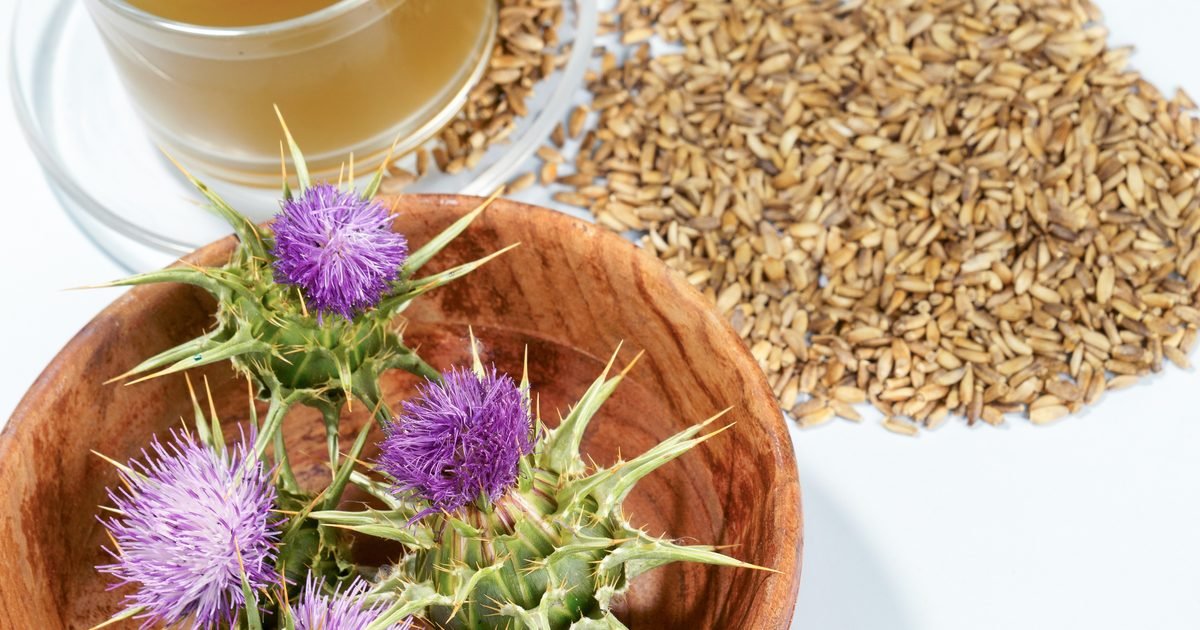
What is milk thistle?
Milk thistle (Silybum marianum) is a flowering plant native to the Mediterranean that’s named for the ‘milky’ white veins on its large, prickly leaves. Although milk thistle has a long-established use as a remedy for liver conditions such as fatty liver disease, hepatitis and cirrhosis, it also has its limitations: beliefs that it may be useful for treating cancer and diabetes are limited, because the studies and methodology supporting these claims are of poor quality. Moreover, there are no published studies supporting milk thistle’s ability to prevent or alleviate a hangover. Despite this, it has a reputation for protecting the liver, including against environmental toxins, and is therefore a popular addition to many wellness protocols. If you’re considering supplementing with milk thistle and have a diagnosed medical condition, are taking prescribed medication or are one of the groups that should exercise caution, speak to your GP for guidance.

Milk thistle is available to buy in oral capsule or tablet form, or as a liquid extract. How the product is presented, marketed and labelled will determine which regulations the manufacturer must comply with. These include:
- Traditional Herbal Registration (THR) – qualifying products carry a THR registration number and have passed the Medical and Healthcare Regulatory Agency (MHRA) quality and safety checks, which verify the information supplied by the manufacturer on the label
- General food supplement – these products are not permitted to carry medicinal claims, and are regulated under general food law. This means the product is not guaranteed to deliver its advertised benefits
Benefits of milk thistle may include:
- Contains antioxidant compounds
- May protect the liver
- May protect the brain from age-related decline
- May protect the bones
- May boost breast milk production
- May reduce the frequency of menopausal hot flushes
- May alleviate acne
- May lower blood sugar levels
- May alleviate indigestion
- May support cancer therapy
Discover our full range of health benefit guides, learn how you detox your body and check out our expert guide on activated charcoal.

Top 10 benefits of milk thistle
1. Contains antioxidant compounds
The active compound in milk thistle, silymarin, is extracted from the ripe seeds of the plant and thought to have protective antioxidant properties, including being anti-inflammatory, neuro-protective, hepatoprotective and anti-microbial. Silymarin is made up of a number of natural phenols called flavonolignans, the most active of which is silybin.
2. May protect the liver
Milk thistle is a popular choice for those with liver conditions including alcoholic liver disease, non-alcoholic fatty liver disease, hepatitis and cirrhosis. More research is needed to understand the mechanism at play, but it is thought that milk thistle may reduce the damage caused to liver cells by free radicals produced during the liver’s detoxification work.
There is no evidence that by supplementing with milk thistle you can protect your liver and compensate against the effects of an unhealthy lifestyle or diet.
3. May protect the brain from age-related conditions
The anti-inflammatory and neuroprotective properties of silymarin make it potentially useful in protecting the brain as we age. Studies based on rodent models appear to support this. That said, there are currently no human studies examining the effects on those with Alzheimer’s, dementia or Parkinson’s. It is also not clear whether the compounds in milk thistle would be sufficiently absorbed to cross the blood-brain barrier.
4. May protect the bones
Osteoporosis is a serious condition that involves the gradual weakening of bones, causing them to become fragile and more likely to break. Animal studies suggest milk thistle may stimulate bone re-mineralisation and, therefore, potentially protect against bone loss. Two human studies have shown encouraging benefits for post-menopausal women.

5. May boost breast milk production
There is limited data in this area, but one clinical study suggests lactating mothers supplementing with 420mg silymarin daily over a period of 63 days produced 64 per cent more breast milk than those taking a placebo.
Clearly more evidence is needed, as well as more information on the safety of milk thistle for breastfeeding women.
6. May reduce the frequency of menopausal hot flushes
Encouraging results have been achieved using randomised, double-blind controlled studies to assess the supplementation of milk thistle (400mg silymarin extract per day) on the frequency and severity of hot flushes in menopausal women.
7. May alleviate acne
Thanks to its anti-inflammatory properties, milk thistle is thought to help alleviate the inflammation of acne. One 2012 study reported that those subjects who took 210mg of silymarin daily for eight weeks experienced a 53 per cent reduction in acne lesions. However, the limitations in evidence means more high-quality research is needed.
8. May lower blood sugar levels
One of the compounds (silybin) in milk thistle is believed to work in a similar way to some diabetic medications. This has been supported by the findings of a 2021 systematic review that found those routinely taking milk thistle experienced a significant reduction in their fasting blood sugar levels and, as a result, in the marker that your doctor assesses to evaluate blood sugar control (HbA1C). Again, the quality of studies is limited and more research is needed.
9. May alleviate indigestion
Milk thistle may help relieve the sensation of fullness and flatulence associated with the overindulgence of food or drink; however, there is limited evidence to suggest it is useful for functional dyspepsia.
10. May support cancer therapy
The antioxidant effects of milk thistle may be helpful to protect healthy cells from the damage of chemotherapy, and some animal studies suggest supplementation may be valuable in reducing the side effects of cancer treatment. That said, human studies are limited and yet to show clinical relevance. As a result, more research is needed to establish milk thistle’s role in cancer treatment.
If you are undergoing cancer therapy, you must always seek the advice and guidance of your oncologist before supplementing with any herbal product.

Potential side effects
Milk thistle is generally considered safe when taken in accordance with the manufacturer’s instructions. However, some people report mild gut disturbances such as nausea, bloating and diarrhoea.
Those who should exercise caution include:
- Pregnant women: there is insufficient evidence to support safe use
- People with diabetes, as well as other medical conditions: for example, milk thistle has an oestrogenic effect, so it may worsen some hormone-sensitive cancers, such as certain types of breast cancer
Those with an allergy to groups of flowering plant, such as the aster, daisy and sunflower (Asteraceae and Compositae) should exercise caution, although allergy to milk thistle is rare.
What is milk thistle good for?
Milk thistle contains compounds with protective antioxidant properties, so it may help reduce the damaging effects of a process called oxidation. Over time, this damage contributes to the changes we associate with aging. Although the herb appears to show potential in a number of areas, its use is limited by the lack of robust, high-quality evidence.
Overall, is milk thistle safe?
Milk thistle is considered a safe herbal supplement when taken in accordance with manufacturer’s instructions. However, if you have a diagnosed health condition, are taking prescribed medication or are one of the groups that should exercise caution, you should check with your doctor before supplementing.
Enjoyed this? Now try:
How do you detox your body?
Best menopause supplements – to support mood, metabolism and vaginal health
The best supplements, tried and tested
Do supplements work?
How to get the most out of supplements
All health content on goodfood.com is provided for general information only, and should not be treated as a substitute for the medical advice of your own doctor or any other health care professional. If you have any concerns about your general health, you should contact your local health care provider. See our website terms and conditions for more information.
