


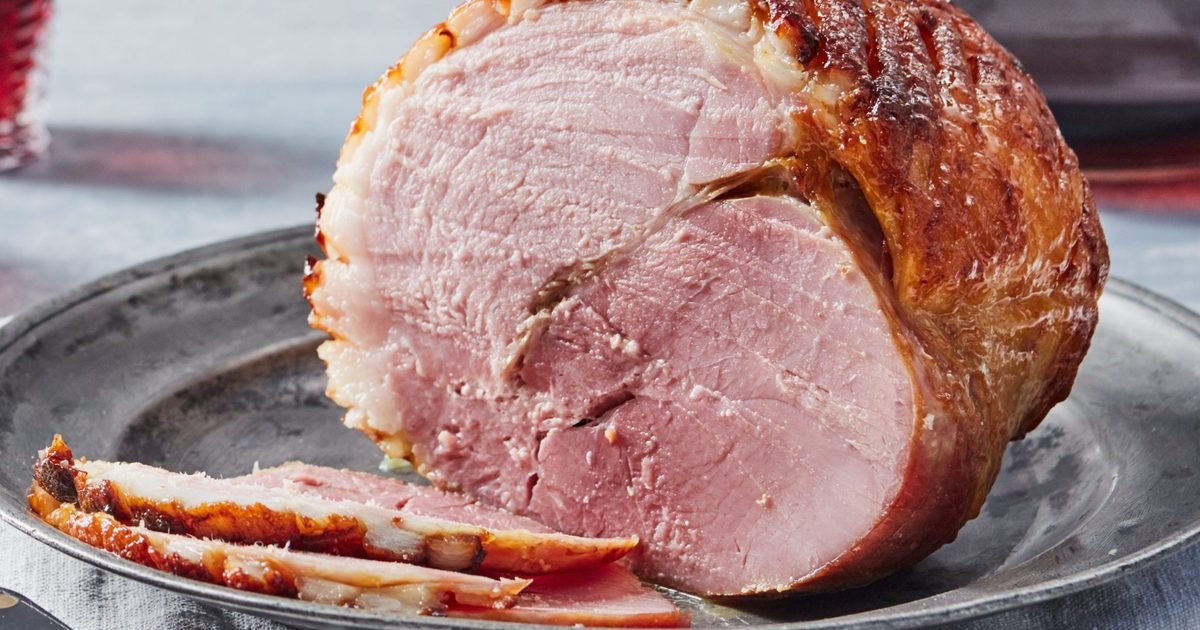
My favourite part of the Christmas dinner has always been the ham – even the dry, overcooked ones I was served as a child. Now that I work in food, I have made it my mission to ensure the ham on my Christmas dinner is juicy, flavourful and preferably with a sweet and sticky glaze. Snaffling a cold cut of ham from the fridge is one of the high points of the festive season. And the best bit is that it just keeps on giving – even a small ham joint will keep a household in sandwiches for up to five days. There’s a reason this cola ham with maple glaze is one of our most popular recipes at Christmas time.
A gammon joint isn’t just for Christmas, either – I think it’s a good investment all year round, from picnic season to birthday parties and New Year’s Eve. Follow our guide on how to cook gammon steaks plus our ideas for top 10 gammon glazes and watch the masses flock. Also check out our extensive collection of Christmas ham recipes for more flavour-packed ideas.

What’s the difference between gammon and ham?

Both gammon and ham are cuts from the hind legs of a pig. Gammon is sold raw and ham is sold ready-to-eat. Gammon has been cured in the same way as bacon, whereas ham has been dry-cured or cooked. Once you’ve cooked your gammon, it’s then called ham.
To make your Christmas ham, you’ll need to buy a gammon – choose smoked or unsmoked and on or off the bone, according to your recipe and preference.
How to prepare a gammon joint
Soaking the gammon in water to remove saltiness is generally a thing of the past, but check with your butcher or look at pack instructions to be sure.
- To start, weigh the meat to calculate cooking time. Roast gammon cooking time is generally 20 minutes per 450g, plus an added 20 minutes.
- Put the meat in a large pan, cover with cold water and bring to the boil, adding any flavourings you wish (cinnamon, bay, peppercorns, coriander seeds and onion all work well).
- Boil for half the calculated cooking time, periodically skimming and discarding any white froth that rises to the surface.
- Drain, reserving the stock if you like, and leave to cool a little. Remove the top layer of skin, leaving a thin layer of fat around the meat.
If you’re looking to upgrade your kitchen kit, here are some of our tried, tested and top-rated favourites that would be perfect for cooking gammon.
How to cook a gammon joint
- Place in a foil-lined roasting tin, cover with more foil and roast for the remaining cooking time at 180C/160C fan/gas 4.
- Twenty to 30 minutes before the end of cooking time, brush with the glaze of your choice – a mixture of maple syrup and coarse-grain mustard is good. Cook uncovered until the glaze has caramelised.
Best ham and gammon recipes
Glazed gammon

Add a sticky honey and mustard glaze to gammon for a delicious sweetness that contrasts with the saltiness of the meat. It’s great for a celebration supper.
Hot honey glazed gammon

I love this recipe I wrote for Christmas, but it would be good at any time of year. Serve up this spicy, sticky and sweet gammon over the festive period. It’s just as fabulous in Boxing Day sandwiches as it is for the main event.
Slow cooker gammon in cola

Use a slow cooker for your Christmas gammon this year. I love how the cola adds a sweet treacly flavour to balance the saltiness of the ham.
We also have this slow cooker gammon recipe for you to try.
Spiced Christmas gammon with membrillo glaze

This Christmas ham recipe uses sweet and sticky quince paste, or membrillo. It also uses the time-honoured method of studding your joint with cloves. It’s simple enough: score the skin in a diamond pattern, then pierce the centre of each diamond with a clove.
Air fryer gammon

I like making the most of my gadgets and this air fryer gammon puts the air fryer to brilliant use, brushed in a simple but satisfying mustard and maple syrup glaze.
Slow-baked sticky gammon

Bypass the pre-boiling stage and use an all-in-one slow-cooking method. This tropical-tinged gammon recipe is made with treacle, pineapple juice and allspice, and slowly cooked in the oven for four hours until butter-soft.
Sticky maple-glazed ham with baked apple sauce

The secret to this picture-perfect ham is slow-roasting it in a foil parcel in a spiced apple juice bath. The steamy environment allows the flavours to mingle beautifully. The whole thing is finished off with a maple glaze, whole baked apples and golden star anise.
Leftover ham recipes
Classic pub grub

Who would turn their nose up at a traditional plate of gammon and mash? It’s ideal for the post-Christmas period, but I think makes a great simple supper all year round. The salty ham is paired perfectly with sweet apple and a punchy celeriac mash.
Ham & watercress salad with clementine dressing

Use up leftover festive ingredients such as ham, hazelnuts, cranberries and clementines in this light salad – just what I crave after a week of indulgence.
Add to soup

Pea and ham is one of the most incredible soup combinations. This bright-green slow-cooker version uses only six ingredients and is garnished with ham shredded from a joint. Serving with crusty bread is a non-negotiable for me.
Warming winter pies

This sensational chunky pie utilises festive leftovers in fine fashion. Combine your ham with cranberries, pistachios and warm Christmas flavours such as nutmeg, mace and sage. It requires homemade hot water crust pastry, so it’s one for a when I want a good kitchen session.
Soft soufflé omelette

Whisks at the ready: give your omelette the soufflé effect to add a touch of refinement to a brunch table. But not too much – I think this version with leftover ham is best served with baked beans.
Try one of our other Christmas ham recipes and find out what to do with your leftovers. Also, discover our how-to-cook bacon guide.
Are you partial to a homemade ham? Share your recipe with us below…
Helena Busiakiewicz
Helena oversees all the recipe testing for the Good Food magazine and website as well writing and developing her own. A trained chef, she’s worked in restaurants, taught cooking in prisons, and worked as a home economist and food stylist. Helena likes getting people cooking and interested in food through her recipes and passion for seasonal ingredients. Discover more of Helena’s recipes
