


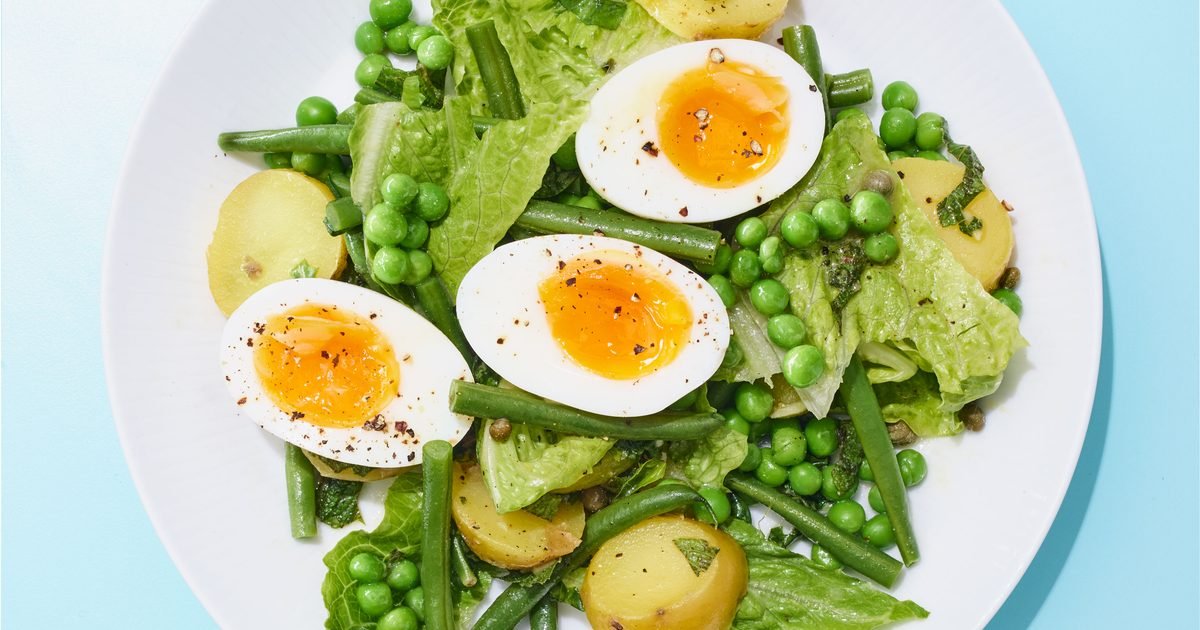
The humble boiled egg is one of the hardest working ingredients in my kitchen. I like to cook a batch a couple of times a week, as they keep well in the fridge and make a great on-the-go protein-rich snack. They’re also a low-effort option for bulking up salads, curries and noodle dishes. For a speedy supper, I like to top a sweet potato & spinach dhal with a fudgy boiled egg.
Alice Shields is one of our food team experts, and doesn’t ‘yolk around’ when it comes to cooking a perfect boiled egg, having developed dozens of recipes over the years.

What to look for when making hard-boiled eggs
Hard-boiled eggs should have completely set whites, but the yolks can have different degrees of softness; they should never be chalky and crumbly or have a green tinge where the yolk meets the white – these are the signs that it’s overcooked.
What is the best way to cook hard-boiled eggs?
There’s some science behind the method that works best for controlling the texture of your yolk. See our guide for how to boil an egg to learn more.
It can be harder to peel eggs that are started in cold water, as they sometimes fuse to the shell. If you’ve always found this to be the case, try starting with boiling water instead. You can also cook eggs in a pressure cooker or specialised egg cooker. Additionally, egg timers that can be placed in the water with your eggs are available – these change colour to indicate how long your eggs have been cooked.
There is no absolute foolproof way to perfectly boil an egg, as each time, the size and temperature of the egg and the temperature of the water (when cooking from cold) may vary. Because eggs cook from the outside in, the whites can easily overcook. However, with a bit of trial and error, you can find the method that suits you.

