


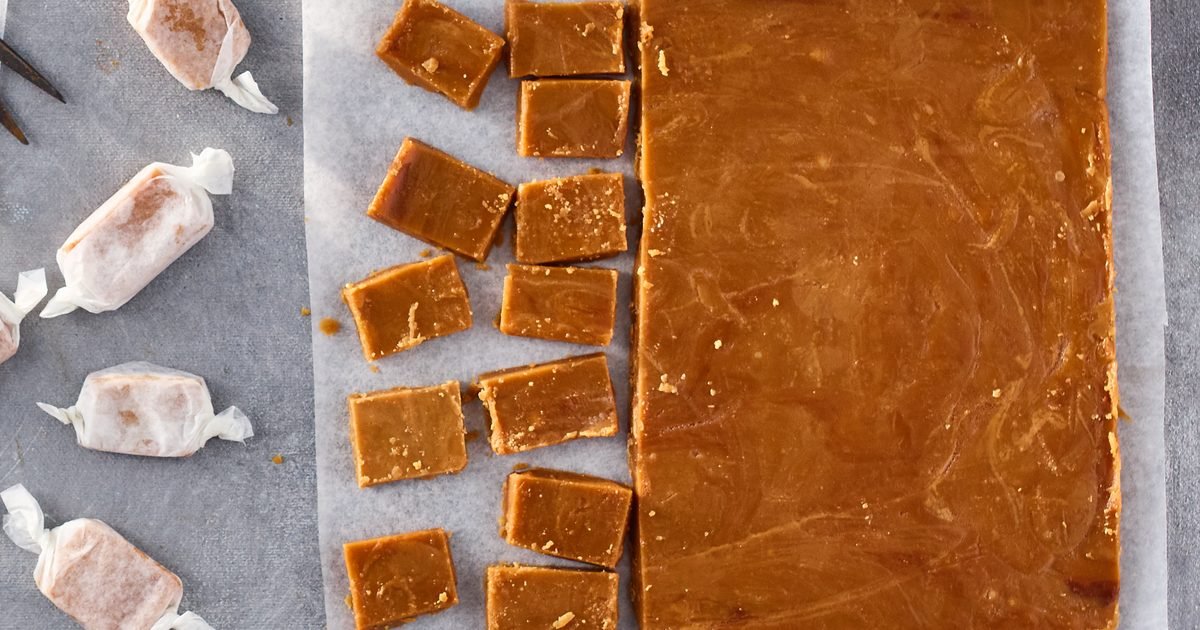
Toffee is made from sugar mixed with milk, butter or cream plus an ingredient such as lemon juice or golden syrup to stop it crystallising. The mixture is heated to between 140C and 154C (‘soft crack’ stage and ‘hard crack’ stage), then allowed to cool and set.
Larger amounts of butter or cream can make chewier, softer toffees that are like caramels, while toffee cooked to a higher temperature becomes brittle but is still chewy to eat.
Lulu Grimes
As Managing Editor for Good Food, Lulu has extensive magazine editorial experience, including roles at olive, Food and Travel and Sainsbury’s Magazine, as well as Murdoch Books in Sydney. She has also written for The Sydney Morning Herald, taught food writing and published several cookbooks. Read her weekly Substack: Taste. Test. Repeat. and see more of Lulu’s recipes

The Maillard reaction, which is caused by heating the dairy and sugar together, is what gives toffee its toasty flavour.
Enjoy our delightful toffee recipes when craving a sweet treat. Toffee pairs beautifully with apples, so why not explore our top toffee apple desserts for creative twists on this classic combo?
For more sweet satisfaction, dive into our caramel recipes and try our homemade salted caramel sauce – ideal for enhancing brownies and cakes. If you’re after a crunchy toffee that’s perfect for decorating, try our bonfire toffee recipe, which creates brittle shards to add a touch of flair to your bakes.
How to make toffee safely
The sugar has to be heated to ‘soft crack’ or ‘hard crack’ stage, which means you’ll need to use a high-sided heavy-based pan and, ideally, a sugar thermometer. If you don’t have a thermometer, you can test your toffee by dropping small amounts into iced water, then squeezing the ball that forms.
A ball of toffee that feels soft and squeezable will be at ‘soft crack’ stage. A firmer ball that’s harder to shape will be at ‘hard crack’ stage. Some recipes cook the sugar at a lower temperature in order to make softer toffee.
There are a few key steps to follow:
- Melt the sugar and butter together gently and evenly to avoid the butter separating out. You can stir the mixture while the sugar is dissolving – but once it has started to boil, stop stirring. Instead, tilt and swirl the pan.
- Make sure your tin is prepared and sitting on a board or damp cloth before you start. Once you pour the hot toffee into the tin, it will heat up quickly.
- Prepare all your ingredients in advance and have all your equipment to hand.
- Take care at all times. Molten sugar will cause serious burns if it splashes on you.
Butter toffee recipe
Makes about 500g
- 300g golden caster sugar
- 300ml double cream
- 125g butter, cubed
- Line the base and sides of a 20x30cm baking tin with baking parchment and put it on a board.
- Tip the sugar, cream and butter into a large, heavy-based, deep saucepan and heat gently, stirring occasionally until all the ingredients have come together and the sugar and butter have melted.
- Put a sugar thermometer or digital cooking thermometer in the pan, then turn up the heat and boil everything together vigorously, without stirring, until the temperature reaches 140C. Remove from the heat and leave for a moment to let any bubbles settle, then carefully pour the molten toffee into the prepared tin, swirling the tin until the toffee fully covers the base. Leave for at least 2 hrs to set, or overnight if possible.
- Use the baking parchment to lift the set toffee out of the tin, then cut the block into squares. If the toffee is sticking to the knife, lightly oil the blade. Wrap the toffee pieces in waxed paper. Will keep in an airtight container for up to two weeks.
Brittle toffee recipe
Makes about 500g
- Oil, for the tin
- 450g golden caster sugar
- ¼ tsp cream of tartar
- 50g salted butter
- Line the base and sides of an A4-sized tin with baking parchment, then oil it really well.
- Put the sugar, cream of tartar, butter and 150ml hot water in a heavy-bottomed pan and heat gently until the sugar is dissolved, stirring occasionally.
- Once the sugar has dissolved, turn up the heat and put the sugar thermometer in the pan.
- Bring to the boil, then continue boiling until you reach ‘soft crack’ stage on the thermometer (140C). This may take up to 30 minutes, so be patient. Don’t leave the pan unattended as the temperature can change quickly. As soon as the mixture reaches ‘soft crack’ stage, tip it into the tin and leave to cool.
- Once cool, remove the toffee from the tin and break up with a toffee hammer or rolling pin. Will keep in an airtight container for up to a month.
How to store toffee
Wrap toffees in waxed paper to stop them sticking to each other. Make sure they’re stored in an airtight container in very dry conditions. Moisture will turn the surface of toffee very sticky.
Three types of toffee flavours
1. English toffee

‘English toffee’ is a type of hard, buttery toffee popular in America that usually has a layer of chocolate and nuts on top.
2. Cinder or honeycomb toffee

Cinder or honeycomb toffee (known as hokey pokey in New Zealand) has baking soda and vinegar added so the toffee froths and makes bubbles as it sets, giving a completely different texture.
3. Caramel

Caramel, which is melted, caramelised sugar with nothing added, is sometimes referred to as toffee – for instance, when used in toffee apples or in our bonfire toffee recipe. When mixed with nuts, it’s often known as brittle.
5 toffee-flavoured desserts to try
Although the flavour is popular in all sorts of dishes, lots of ‘toffee’ recipes don’t actually contain toffee; sticky toffee pudding, for example, has a toffee-flavoured sauce but doesn’t require you to make toffee first. Shards of toffee work well in cakes, biscuits and other bakes and can be stirred into ice cream. Toffee can also have flavours added, from salt (salted caramel) to alcohols (such as Irish cream) and spices, nuts and dried fruit.
1. Toffee sauce

A pinch of sea salt really complements the luxurious taste of silky caramel – this homemade toffee sauce will work with lots of different desserts.
2. Sticky toffee apple pudding

Try a fruity version of the classic sticky toffee pudding for a rich after-dinner treat. Serve with cream, custard or vanilla ice cream.
3. Toffee apple bread & butter pudding

Bonfire night treat meets classic comfort food in this doubly delicious dessert that your family won’t be able to resist.
4. Toffee apple cake

This showstopping bake is a celebration of classic apple desserts with spiced sponge, vanilla icing and a sticky caramel apple filling.
5. Vegan sticky toffee pear pudding

A lighter version of sticky toffee pudding, rich with dates and spices, and the juicy texture of poached pears, this vegan dessert is sure to please a crowd.
Liked this? See more sweet treat inspiration:
Sticky toffee yule log
Bonfire Night dessert recipes
20 mini dessert recipes
Autumn baking recipes
Coffee desserts
