


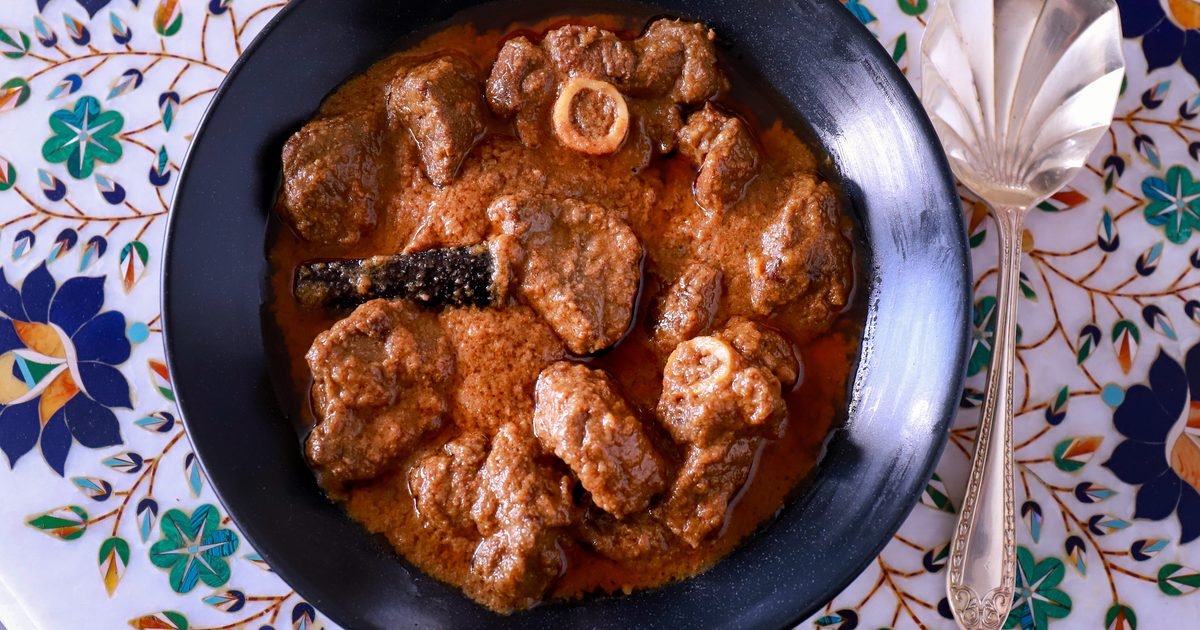
Korma or qorma, said with a guttural “k” sound, is one of the stars of North Indian Muslim cuisine and can be found on festive tables for Eid and weddings. According to legend, korma is based on the Turkish qovurma (kavurma), and over time, has evolved into the delicately spiced and perfumed dish that we know today. Not the dish that appears in many Western recipes and versions. Historical sources suggest that korma did not appear in royal kitchens until the 18th century. One of the most famous renditions is served at Karim’s, a restaurant in Old Delhi, whose founders claim to be direct descendants of the chefs who served the Mughal rulers.
Made properly, korma takes time and patience to prepare, ensuring all the ingredients are added in the correct sequence to create a complex sauce with layers of flavour. It starts with the painstaking bhunai of the meat — best described as a process of slowly sautéing meat in hot fat and spices while simultaneously deglazing the cooking pot in stages with the addition of other ingredients such as garlic and ginger paste and yogurt.
Spices are used in two forms: whole at the start, to flavour the ghee, and in ground form towards the end. As the bhunai progresses, bits of caramelised ingredients clinging to the sides of the hot pan are loosened and become incorporated in the sauce, developing a deeper flavour, which is then absorbed by the meat. The dish is finished with the addition of a small quantity of highly aromatic ground nutmeg and mace, garam masala and a hint of kewra (pandan) to impart the characteristic taste profile. These spice powders and perfumes are added at the end because their delicate essences would evaporate and disappear if cooked too early in the process.
The sign of a well-cooked qormais is the granular (danedar) appearance of the sauce and layer of coloured, fragrant ghee on the top. If the fat has not separated in this way, the dish is considered raw, even though it is technically cooked and safe to eat.

Korma/qorma
The cut and quality of the meat are important for this dish. Lean meat from the leg or ribs, cut into pieces with the bone included, is best. The meat can be lamb, goat or venison, but it must be very lean. Asian butchers sell the right cuts and also remove the fat before selling, so it is worth finding one to supply the meat for this dish.
Serves: 4
Prep: 30 mins
Cook: 1 hr (approx)
Equipment needed: Heavy-bottomed pan with a well-fitting lid
Ingredients
- 150g ghee or unsalted butter, you can reduce the quantity to 100g if you like, or skim off the fat later. I would advise using the full amount, as it is important to have enough fat to fry the ingredients using the bhunai method. I have added the option of unsalted butter in case you cannot find ghee.
- 6 green cardamoms
- 2 brown/black cardamoms
- 6 cloves
- 4 cm piece cassia bark
- 8-10 black peppercorns
- 1 tbsp lightly toasted and ground poppy seeds (khus khus), optional
- 2 large red onions, one sliced and the other ground into a paste or finely grated
- 1kg lean goat/venison/lamb on the bone (ribs or leg), cut into approx. 5 cm pieces.
- 2 tbsp garlic paste (freshly made is best and will need a large bulb of garlic to generate this amount)
- 1 tbsp ginger paste
- 150g plain yogurt, beaten to make it smooth
- 2 tsp Kashmiri chilli or deghi mirch powder (I like adding this for colour)
- 2-3 tsp hot chilli powder, adjust according to your taste
- 1 tsp kewra (pandan) water, available in Asian shops or online
- 1 pinch of ground nutmeg
- 1 pinch of ground mace
- 1 tsp garam masala
Method
1. Heat the ghee/butter until it has melted and clarified — this should take about a minute. Add the whole spices and once these start to release their flavour, add the sliced onion and fry until light golden in colour.
2. Add the meat, and brown lightly on all sides.
3. Mix the garlic and ginger pastes and add them to the meat, one tablespoon at a time, with a gap of two minutes each time. Stir the meat as you add this. Continue to fry on a medium-high heat, stirring at regular intervals to ensure the meat does not catch at the bottom. If it starts to stick, add a couple of tablespoons of water. Continue this process of bhunai until the ghee starts to separate and the smell of garlic has become less acrid.
4. Add the ground/grated onions and continue the bhunai on medium/high heat until the ghee separates once again and the smell of raw onion has diminished. This is the way I was taught to make it; other recipes use fried onions.
5. Reduce the heat and add the yogurt slowly, one tablespoon at a time, stirring in between so that it does not curdle. Stir in the chilli powders too and fry on medium heat until the ghee separates once again. It should now have a reddish-brown colour. This entire process of bhunai should take roughly half an hour and should not be rushed, as it imparts a depth of flavour that cannot be achieved quickly.
6. Add 200ml of water and some salt, tasting to get the amount right.
7. Add the kewra, nutmeg, mace and garam masala, and simmer on a low heat with a well-fitting lid on until the meat is completely tender and comes away from the bone easily. Serve with roti, naan or rice.

Liked this? Discover more inspiration…
Curry in a hurry: 20 curry recipes you can make in 20 minutes
High protein curry recipes
Best baking books
Healthy chicken curry recipes
Most popular curry recipes
