


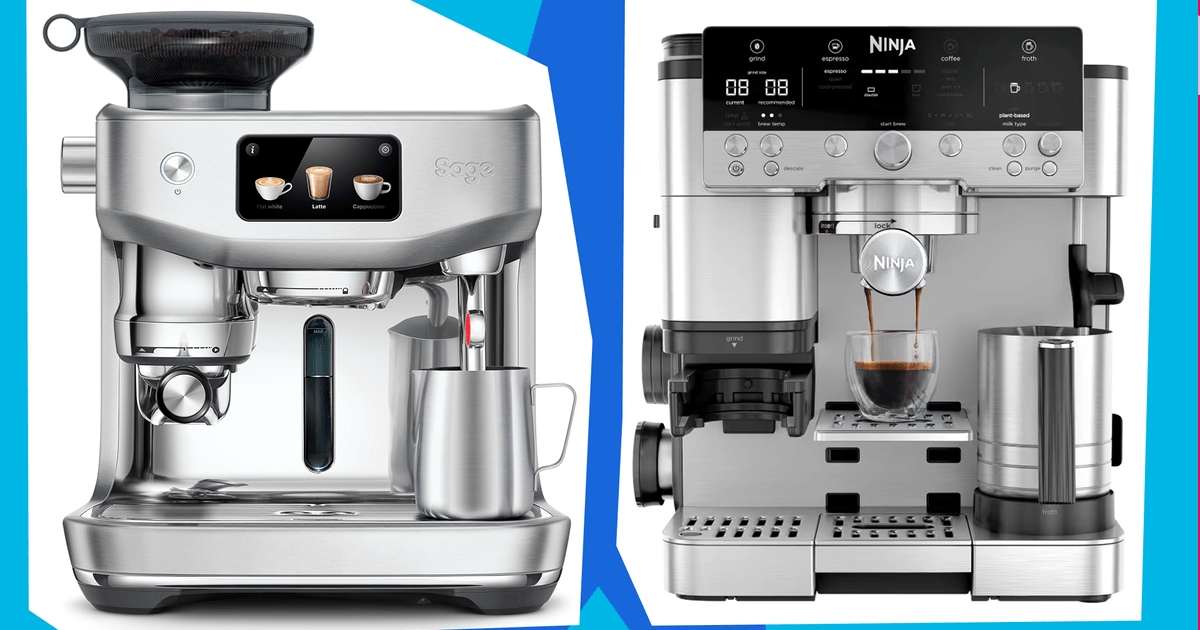
Sage and Ninja are two huge hitters in the world of at-home coffee, and right now, they’re the coffee machine brands on everyone’s lips. Both have a huge following online and are widely praised due to the sleek style, design and ease of use of the machines.
Until recently, Sage was the go-to brand for coffee enthusiasts who wanted both simple manual offerings and automated cafe-style drinks at home. However, now mega-brand Ninja has entered the coffee game, offering many of the same features for a more enticing price tag; it’s not so clear-cut which brand you should choose.
So who actually offers the best at-home coffee? At Good Food, we’ve tested dozens of coffee machines, including both Sage and Ninja’s best sellers. Here, we compare four machines with similar designs and features to help you decide which brand best suits your needs.
Jump to section:
Ninja vs Sage at a glance
Ninja coffee machines
Bean-to-cup: Ninja Luxe Café Pro Series ES701UK
Available from Ninja (£729.99), Currys (£729.99), Argos (£729.99)

Star rating: 5/5
We gave Ninja’s most advanced offering top marks in our tests due to its easy guided setup, positive performance and modern, albeit large, design. We were particularly impressed with its automated milk texturing, which made silky-smooth cappuccinos. Despite its slightly daunting number of coffee options (25 to be exact) it’s easy enough to use if you’re a beginner. The machine comes with most of the bits you need to get started, except for a knock box – though you can still use the machine without one.
Available from:
Read more in our best bean-to-cup coffee machine guide
Espresso: Ninja Luxe Café Mini Plus espresso machine ES352UK
Available from Ninja (£419.99), John Lewis (£419.99)

Star rating: 4.5/5
For good, easy espresso, the Ninja Mini Plus is ideal. It doesn’t have quite as many bells and whistles as the pro above, but our reviewer was impressed by the quality of the shots pulled and how easy it was to use. Plus, despite offering much more than espresso, it’s not substantially bigger than the espresso-and-milk-only Sage Bambino Plus.
Available from:
Read more in our best espresso machine guide
Sage coffee machines
Sage is very much a legacy brand in the UK when it comes to coffee.
Though it also makes other appliances such as toasters, microwaves and bread makers, it’s best known for its ultra-premium espresso and semi-automatic bean-to-cup offerings. The premium price point of Sage machines appeals to users who want a machine that’s really built to last, are serious about their coffee but still want ease of use at home.
It’s worth noting that while Sage is known by the brand name Breville outside of the UK, in places such as the US and Australia, the brand actually differs entirely from Breville UK, though they both produce kitchen appliances.
Bean-to-cup: Sage the Oracle Jet
Available from Amazon (£1,669), John Lewis (£1,699), Sage (£1,699.95)

Star rating: 5/5
The super premium Sage Oracle Jet performed spectacularly in our expert tests, producing perfect espresso with its barista guidance, automated tamping and automated milk frothing. The full colour touchscreen guidance and highly customisable Baratza grinder place this as one of the best automated machines you can buy for both beginners and more experienced users. Features, build quality and espresso consistency are reflected in the much higher price.
Available from:
Read more about the Oracle Jet, as well as the Sage Dual Boiler and Barista Express and on our best bean-to-cup coffee machine page.
Espresso: Sage the Bambino Plus
Available from Amazon (£359.95), John Lewis (£359.95), Sage (£399.95)

Star rating: 4.5/5
Sage’s manual offering takes a little more time to master than Ninja’s machines and comes with fewer drink options, but according to our reviewer, the payoff is worth it. It produces a well-balanced espresso with a thick, glossy crema and has a professional steam wand for milk texturing.
Available from:
Read more about how we got on with the Sage Bambino and more on our best espresso machine guide.
Ninja vs Sage compared
Every coffee machine we test goes through a series of rigorous tests, with the results documented to ensure we’re able to compare every machine. In our tests, we look for things such as espresso quality, build quality, design, features and overall value for money.
- Coffee quality: In our coffee quality tests, Sage and Ninja both performed well. However in the bean-to-cup category, Sage did generally out perform Ninja in terms of shot consistency and typically offered a more balanced espresso too. Sage’s Oracle Jet has more grinding adjustments – a total of 45 vs the Ninja Pro, which has 25. For espresso machines, we found Sage’s manual Bambino harder to master and therefore, you might find your initial espressos aren’t quite as good as they could be. However, with some practice, you can achieve even better precision and flavour than an automated machine.
- Ease of use: Both Sage and Ninja’s bean-to-cup machines offer impressive setup and guidance, making them well suited even for complete beginners. In our tests, we were impressed with how in-depth the guidance was on the Ninja Luxe Cafe Pro and Ninja Luxe Mini. Sage’s semi-automated machines, such as the Oracle Jet, have even greater guidance with on-screen instructions to follow along with. Our reviewer did note that the Bambino is harder to master, so if you’re looking for a hands-off experience, that might not be right for you.
- Size and design: Smaller countertops will benefit from Ninja’s Luxe Mini or Sage Bambino as they are both designed to be compact – though our reviewer did note the Bambino is on the larger side for a manual espresso. The Oracle Jet and Ninja Pro both require a bigger worktop space to accommodate them. Both Sage and Ninja have thought a lot about their designs, though Sage’s ultra-premium shells are typically mostly stainless steel, whereas Ninja uses more plastic in its design to keep prices down.
- Features: If lots of features are important to you, our reviewer thinks the Sage Oracle Jet is hard to beat. It offers the best of both words, with almost full touchscreen automation, while still giving you the option to manually adjust grind size and milk to a precise level. The Ninja Luxe machines also offer a lot of drink options and features, including plenty of grind settings and manual milk frothing, though this is a tad harder to access as the focus is more on full automation.The Bambino Plus is very stripped back, offering only simple settings for espresso, milk and hot water.
- Price: This is where you might find the biggest difference. Although both the Sage and Ninja machines come in at a higher price point, the Sage Oracle Jet is a step up from the rest at £1,699.95 full price, meanwhile the more basic manual Sage Bambino Plus costs just £399.95 The Ninja Luxe Cafe Pro will set you back £729.99, while the Ninja Luxe Cafe Mini Plus costs £529.99.

How do you use a Sage coffee machine?
Using one of Sage’s semi-automatic machines is easy. The Oracle Jet automatically grinds, doses and tamps your coffee before extracting the espresso. Milk frothing is also automated but you can also adjust the temperature and texture. The Bambino Plus is trickier as it requires you to grind your beans separately, fill and tamp the portafilter, then lock it into the group head and select a single or double shot. Both machines have automatic milk frothing functions, making cappuccinos and similar very simple.
How do you clean a Sage coffee machine?
You should clean the portafilter and filter basket after every use. Wipe down the steam wand immediately after frothing milk and run its automated cleaning function to clear any residue. Empty and rinse the drip tray regularly, ideally after a couple of uses. The Bambino Plus will alert you when a deeper cleaning cycle is needed, usually after 200 extractions. The Oracle Jet also benefits from regular group head flushing weekly, following the instructions in the manual or on the settings menu on the screen.
How to descale a Sage coffee machine?
Both the Oracle Jet and Bambino Plus have indicators to let you know when descaling is needed, although the process differs. Generally though, you will need to empty the water tank, remove the water filter and add a descaling solution mixed with water. Follow the machine’s specific descaling instructions, which guides you through the cycle and subsequent rinsing process. The frequency depends on water hardness and usage.

How do you use a Ninja coffee machine?
Built-in grinders and assisted tamping in both the Ninja Luxe Pro and Mini make espresso-making easy. Select your preferred drink and basket size, then place the portafilter into the grinder. The machine recommends a suitable grind setting and doses the correct amount of coffee. Once tamped, lock the portafilter into the group head and select your brew. Both models also offer automatic milk frothing, while the Pro has additional drink options and frothing settings.
How do you clean a Ninja coffee machine?
After each use, empty the coffee grounds from the portafilter and rinse it. Wipe down the outside of the steam wand too. The Mini Plus and Pro both have automatic steam wand cleaning, which flushes away milk residue after frothing. Empty and rinse the drip tray regularly – there’s a floating indicator to let you know when it’s full. You should also wash the removable accessories according to the manual although several parts are dishwasher safe. Both machines also have an automatic cleaning cycle, which takes around six minutes and should be run whenever prompted by the machine. This removes accumulated coffee oils and residue from the group head.
How do you descale a Ninja coffee machine?
Both Ninja Luxe machines have an automatic descaling programme, with an indicator to let you know when it is needed. First, empty the drip tray and add descaling solution to the water tank, following the quantities in your model’s manual. Select the descale function to start the cycle, which flushes the solution through the internal components to remove limescale. Once complete, rinse the machine thoroughly with fresh water as instructed in the manual.

Is Ninja better than Sage?
Neither brand is a clear winner, with both scoring highly in our tests. Ninja’s Luxe Cafe Pro and Sage’s Oracle Jet both achieved 5/5, offering excellent coffee and plenty of versatility. Ninja stands out for its ability to make filter coffee and cold brew, while Sage offers greater adjustability and a more premium, fully automated experience. The brand’s less premium models both scored 4.5/5, with the Ninja Mini Plus offering more drink variety in a compact design, while the Bambino Plus impressed with quality espresso and straightforward milk texturing.
Who it’s for: Choose Sage for a more traditional espresso experience or premium automation and features. Choose Ninja for drink variety and value for money.
Other coffee machines to consider
For more options, we’ve also tested the De’Longhi Eletta Explore, which offers a wide choice of hot and cold drinks and the Sage Barista Express, a more hands-on option for espresso aficionados. You can find more recommendations in our best coffee machines, best bean-to-cup machines and best espresso machines guides.
How we test coffee machines
We put all four machines through their paces in a home kitchen environment. Each was assessed against the same criteria, including ease of set-up and use, build quality, value for money, coffee quality and consistency and ease of cleaning. We also assessed their additional features, testing the milk frothers and different drink settings where available. This allowed us to compare their performance fairly and identify the strengths and weaknesses of each model.

More reviews
Best espresso coffee machines
Best bean to cup coffee machines
Is HexClad worth it?
Best non-stick frying pans
Best saucepans
Best pan sets
Best griddle pans
Best saute pans
Best pancake pans
Best cast iron skillets
Best casserole dishes
Best stainless steel frying pans
Best paella pans
How to store pans
How to care for non-stick cookware
Is Le Creuset worth it?
Is KitchenAid worth it?
Is Our Place worth it?
Are Smeg appliances worth it?
