


LONDON, May 25 — Matrimonial Chicken inspired by Ayam Masak Merah. Pajeri Nenas. Coconut Pandan Layered Custard inspired by Tepung Pelita. Pandan Tiramisu.
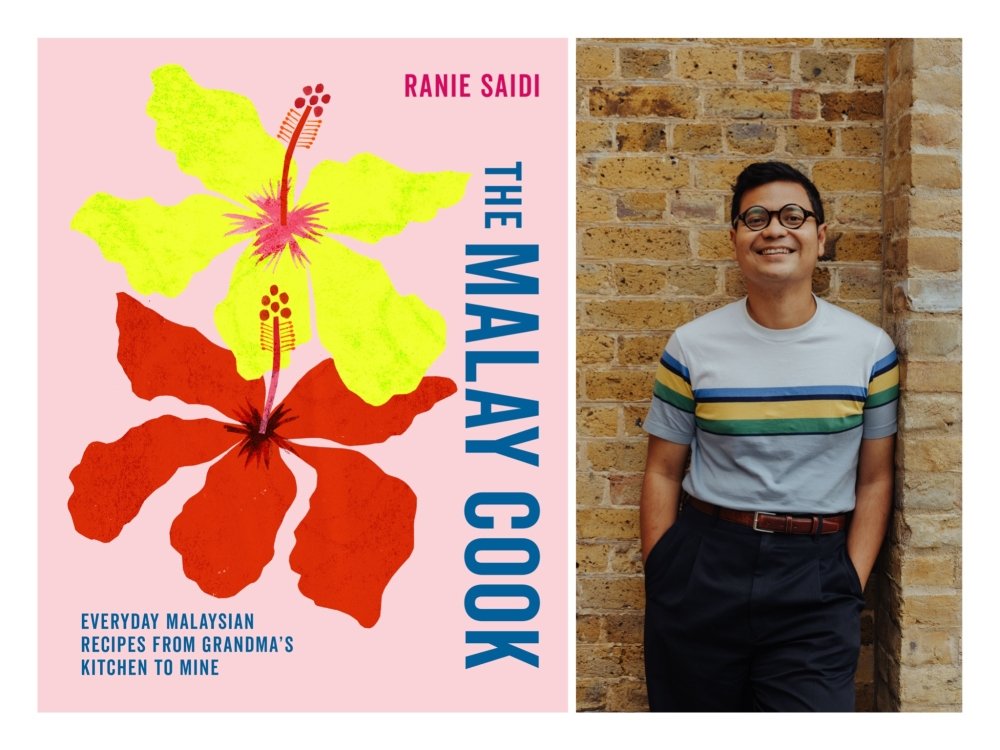
The Malay Cook is Ranie Saidi’s way of preserving the legacy of his grandmother Che Aminah Ismail’s signature wedding catering dishes.
The debut cookbook by London-based Ranie is selling well in the UK – it hit 1,000 pre-orders before its actual release – where Malay and Malaysian cuisine is growing beyond just nasi lemak and char kway teow.
Ranie contributed to this with his very popular and always sold-out supper clubs in London.
“I started cooking as part of grieving my grandmother’s loss. Two years after she passed away, I moved to London, thinking that putting an ocean between myself and my grief would somehow make it easier,” Ranie said.
As a young boy, Ranie was his grandmother’s little shadow, quietly learning just by watching her cook.
Born in Pasir Mas, Che Aminah lived all over Malaysia with her army officer husband until she settled down in Taiping to open her wedding catering service.
Sadly, after she died, her treasured recipe book was stolen, robbing the family of their inheritance.

In London, Ranie Saidi participated in various supper clubs to showcase Malay food (left). Each menu curated by Ranie Saidi told of his culinary heritage which he inherited from his late grandmother (right). — Pictures courtesy of Ranie Saidi
In London, Ranie Saidi participated in various supper clubs to showcase Malay food (left). Each menu curated by Ranie Saidi told of his culinary heritage which he inherited from his late grandmother (right). — Pictures courtesy of Ranie Saidi
What Ranie was left with were his taste memories of the dishes and an important lesson on how to become an intuitive cook.
“The greatest lesson she ever gave me was the art of tasting. The Malay flavours I grew up with were never overly spicy or overly sweet.”
“It was always about balance, where no flavour dominates because every ingredient has its own place and purpose.”
In London, Ranie searched for his identity by recreating his grandmother’s dishes, using memories gathered from his parents and aunt.
At that time, Malaysian food was gaining popularity primarily for its unique Chinese and Indian dishes but Malay fare was still little known in London.
“This became a catalyst to reclaim the Malay cooking I grew up with. At the same time, I also had to be honest about how living in London had changed my life. I adapted the dishes and ingredients to reflect that life while still respecting the essence.”
Of all his grandmother’s dishes, Daging Masak Hitam was the hardest to recreate. By the time Ranie’s father asked her for the recipe, her memory had failed and she could not recall some of the steps.
With different versions from his relatives, Ranie had to recreate the dish from memory and instinct.

One of the desserts served at Ranie Saidi’s supper club reflects distinct Malay flavours. — Picture courtesy of Ranie Saidi
One of the desserts served at Ranie Saidi’s supper club reflects distinct Malay flavours. — Picture courtesy of Ranie Saidi
“At the same time, I also needed to make it accessible for people who may have never cooked Malay food before.”
“The recipe in the book became a celebration of both my grandmother’s cooking and my own interpretation, which involves cooking it in the oven to better suit the London lifestyle. I hope Malaysians won’t bash me for this!”
The book offers an in-depth glimpse into the agak-agak method of cooking which shuns precise measurements but relies instead on taste,
Ranie takes it a step further by tabulating how to achieve the various flavour groups — sweet, sour, salty, spicy, creaminess, aromatic, nutty and pungent — in The Malay Flavour Table,
The table also has a dual purpose, as Ranie explained, “accessibility is really important to him,” having gone through the challenges of not always being able to find the right ingredients in London.
It’s a table built from many years of trial and error, as Ranie had to go through many failures before finding the right substitutions.
Ranie shares how some called his sambal inauthentic because he omits belacan, since it’s a Kelantanese recipe.
He had to omit it earlier due to the lack of supply and because he was concerned for his neighbours who won’t appreciate the pungent smell of fermented prawn paste.

A plate of fragrant lime and pandan rice is paired with his grandmother’s recipe for Malay Wedding Curry as inspired by Ayam Masak Merah, together with Potato and Tempeh Sambal and Pineapple Relish (left). Pandan Kaswi Steamed Cake with vanilla and palm sugar ice cream and shredded coconut (right). — Pictures courtesy of Ranie Saidi
A plate of fragrant lime and pandan rice is paired with his grandmother’s recipe for Malay Wedding Curry as inspired by Ayam Masak Merah, together with Potato and Tempeh Sambal and Pineapple Relish (left). Pandan Kaswi Steamed Cake with vanilla and palm sugar ice cream and shredded coconut (right). — Pictures courtesy of Ranie Saidi
“The Malay Flavour Table exists to give people options and substitutions, whether due to ingredient accessibility, allergies or dietary requirements. What I never want is for someone to look at a recipe and decide not to cook it simply because they can’t find one ingredient!
“Truthfully, our food culture has always been adaptable and resourceful and I think that’s one of its greatest strengths, which we should celebrate. That flexibility is part of what makes Malay cooking so special and alive.”
At the heart of Malay cooking are the spices, pastes and sambal, which form the foundation of many dishes.
Preparing them properly requires significant time and care; Ranie believes this is why they deserve the spotlight in the main part of the cookbook.
In London, supermarket shelves are dominated more by spice blends for Pakistani or Indian dishes, which led Ranie to create his own spice mix to cook the gulai he missed from the East Coast.
This cookbook was a labour of love that took him three years to bring to life.
Despite rejections from five literary agents, he pushed ahead and connected with his current agent who guided him through the writing and rewriting process.
“Many cookbooks are built around comforting memories whereas my story began from grief and vulnerability — subjects we don’t often openly discuss. Finding the balance between storytelling and recipes took time.”
Like therapy, Ranie found his voice through repeated writing, which led his publisher to take a chance on him as a debut author.
The cookbook’s design, especially the cover, is layered with meaning, benefiting from Ranie’s experience in creative brand building and reflecting his roots as a Malay cook.

Ranie Saidi also released a limited Red Ginger Lily Chili Oil for sale, where torch ginger flower or ‘bunga kantan’ is used to infuse chili oil. — Pictures courtesy of Ranie Saidi
Ranie Saidi also released a limited Red Ginger Lily Chili Oil for sale, where torch ginger flower or ‘bunga kantan’ is used to infuse chili oil. — Pictures courtesy of Ranie Saidi
His brief required incorporating the colours of the Malaysian flag, the hibiscus as the national flower and squares on the book’s spine to reflect the craftsmanship of the Malay tikar mengkuang weaving tradition.
After its release, the cookbook quickly went into reprint, as it found favour with many. This is a boon for Ranie as a debut author because everything depends on sales figures.
Media attention in the US and London has been overwhelming too, showing people’s eagerness to learn more about the dishes.
“Seeing some of the dishes featured on the covers of national newspapers has been incredibly emotional. Malaysian food is so loved on this side of the world and I felt proud to contribute to the conversation.
“In many ways I was reclaiming what had been lost and sharing it in a way I hope my grandmother would have wanted. I never wanted to write simply for the sake of writing. It had to carry meaning and purpose that could outlive me one day.”
Ranie hopes the book will also inspire others to collect their family recipes before they disappear.
“Recipes carry history, memory and identity and they deserve to be passed from one generation to the next.”
* ’The Malay Cook’ is available at Kinokuniya Malaysia or the bookstore’s website.
* For more on Ranie Saidi’s journey, follow his Instagram: @raniesaidi
