


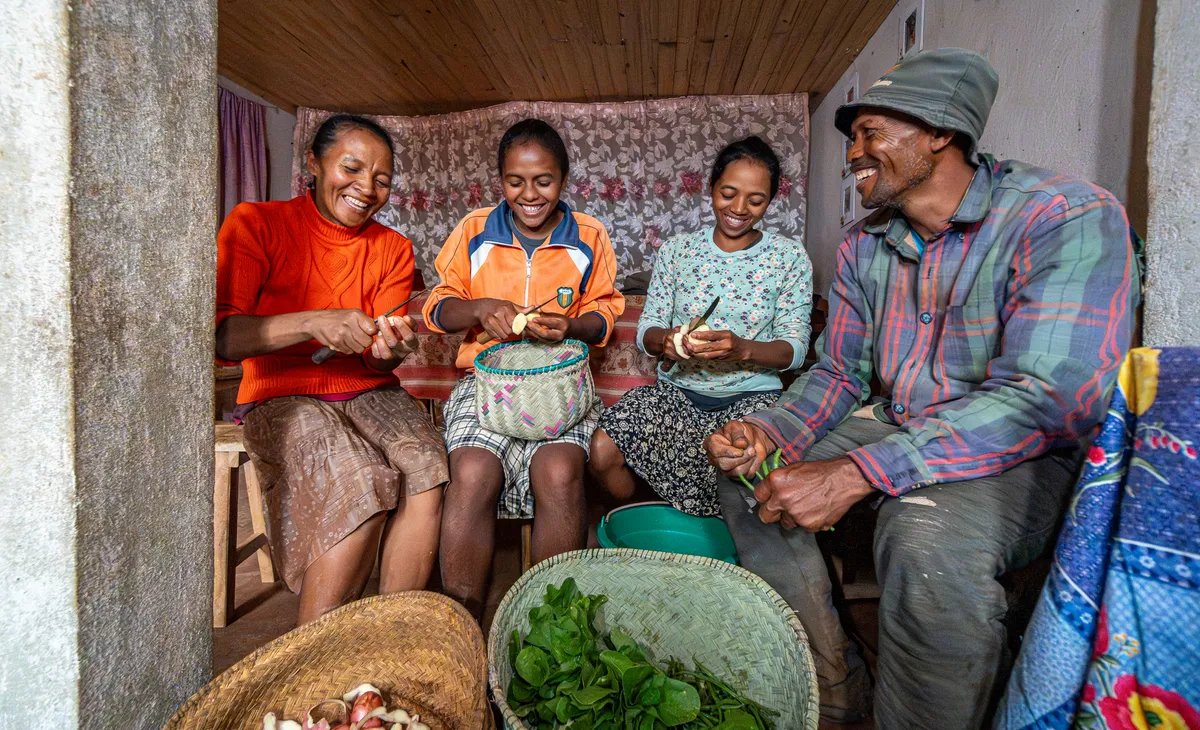
When asked why the adoption of improved nutrition practices has been so rapid, Imberty points to the immediacy of results.
“Communities, farmers, parents – all testify that the impact on health is almost immediately visible, and children and adults alike are healthier and happy to eat tastier meals,” he says. “There is no need to be a doctor to see the benefits of improved nutrition.”
By linking financial resilience, social learning, agricultural practices and nutrition awareness within a single community platform, CBSGs are helping to turn short-term behaviour change into sustained habits.
The approach highlights a broader shift in understanding – that nutrition is about both access to food, and about the social systems that shape how it is produced, shared and consumed. “Sustainable nutrition improvement requires not only informing individuals,” concludes Dr Jahangir, “but transforming the environments in which decisions about food, care and health are made.”
