


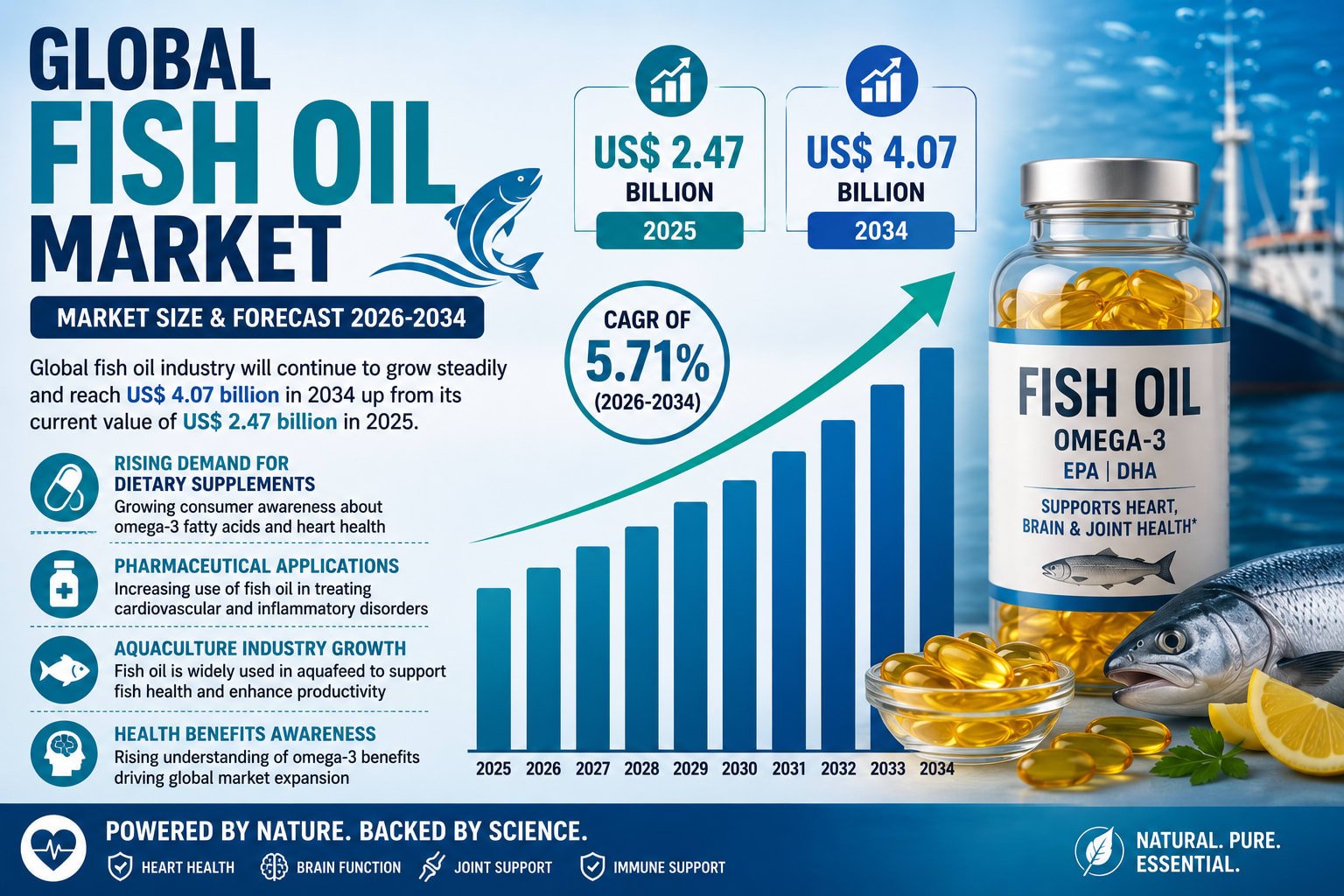
The global fish oil industry is entering a period of sustained growth as consumers, healthcare providers, and food manufacturers increasingly recognize the importance of omega-3 fatty acids in supporting long-term health and wellness. Once considered a niche nutritional ingredient, fish oil has become a mainstream product used across dietary supplements, pharmaceuticals, aquaculture feeds, and functional food applications.
According to Renub Research, the global fish oil market is projected to grow from US$ 2.47 billion in 2025 to approximately US$ 4.07 billion by 2034, expanding at a CAGR of 5.71% during the forecast period. This growth is being fueled by rising awareness of omega-3 health benefits, increasing investments in aquaculture, and growing demand for preventive healthcare solutions worldwide.
As populations age and consumers become more proactive about their health, fish oil is emerging as one of the most valuable ingredients in the global nutrition industry. From heart health supplements and pharmaceutical products to animal nutrition and fortified foods, fish oil is finding new applications that continue to expand its market potential.
Understanding the Importance of Fish Oil
Fish oil is derived primarily from the fatty tissues of oily fish such as salmon, sardines, mackerel, anchovies, and herring. It is widely recognized for its high concentration of omega-3 fatty acids, particularly Eicosapentaenoic Acid (EPA) and Docosahexaenoic Acid (DHA).
These nutrients have been extensively studied for their contribution to:
- Cardiovascular health
- Brain function
- Eye health
- Joint flexibility
- Cognitive development
- Anti-inflammatory support
Fish oil is commonly available in capsules, soft gels, liquids, and concentrated pharmaceutical formulations. Beyond human nutrition, it also serves as an important ingredient in aquaculture feeds and animal nutrition products.
Growing scientific evidence supporting omega-3 consumption has significantly strengthened consumer confidence in fish oil products. As a result, the market continues to attract investments from supplement manufacturers, pharmaceutical companies, and food producers seeking innovative health-focused solutions.
Rising Demand for Omega-3 Supplements
One of the strongest growth drivers for the fish oil market is the increasing demand for omega-3 dietary supplements.
Consumers today are more informed about the relationship between nutrition and disease prevention than ever before. The rise in lifestyle-related health conditions—including heart disease, obesity, diabetes, and chronic inflammation—has encouraged millions of people to seek nutritional supplements that support overall well-being.
Omega-3 fatty acids have become particularly popular because they are associated with several health benefits, including improved cardiovascular function, enhanced brain performance, and reduced inflammation. Healthcare professionals frequently recommend omega-3 supplementation as part of a balanced wellness strategy.
The aging global population is also contributing to demand growth. Older consumers often use fish oil supplements to support cognitive health, joint mobility, and cardiovascular function. As life expectancy increases across many countries, preventive healthcare solutions are becoming increasingly important.
Developed economies continue to lead supplement consumption, but developing markets are catching up rapidly. Rising disposable incomes and greater access to health information are encouraging consumers in Asia, Latin America, and the Middle East to invest in nutritional products.
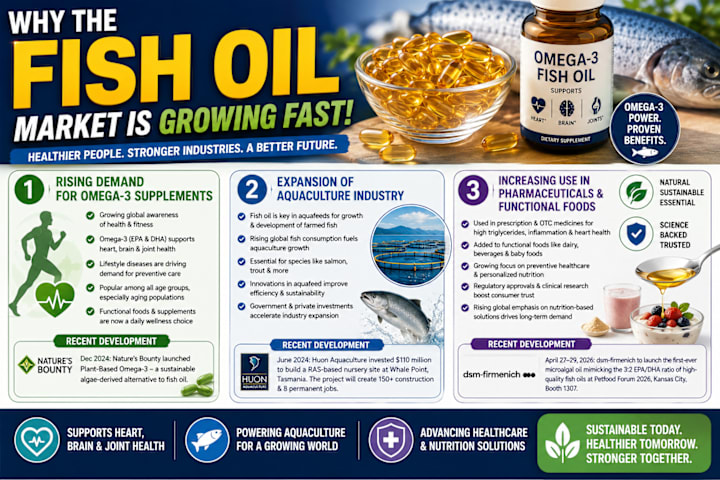
Innovation is further strengthening the market. In December 2024, Nature’s Bounty introduced a plant-based omega-3 supplement derived from algae, reflecting growing consumer interest in alternative omega-3 sources while highlighting the broader popularity of EPA and DHA nutrition products.
The increasing integration of omega-3 ingredients into everyday wellness routines suggests that demand for fish oil and related products will remain strong throughout the coming decade.
Aquaculture Expansion Is Creating New Growth Opportunities
Another major factor driving the fish oil market is the rapid expansion of the global aquaculture industry.
As global populations continue to grow, seafood consumption is increasing significantly. Wild fish stocks alone cannot satisfy future demand, making aquaculture one of the fastest-growing food production sectors worldwide.
Fish oil plays a critical role in aquaculture because it provides essential nutrients necessary for the healthy growth and development of farmed fish species. It is widely used in aquafeeds for species such as salmon, trout, and other high-value seafood products.
The benefits of fish oil in aquaculture include:
- Enhanced fish growth
- Improved feed efficiency
- Better nutritional profiles
- Increased disease resistance
- Higher-quality seafood production
Governments and private investors are investing heavily in aquaculture infrastructure to ensure long-term food security and sustainable seafood production.
Technological innovations are also improving fish feed formulations, allowing producers to maximize efficiency while maintaining nutritional quality. These advancements are helping aquaculture operators meet rising global demand while reducing environmental impact.
A notable example occurred in June 2024 when Huon Aquaculture announced a US$110 million investment to expand its Atlantic salmon nursery operations in Tasmania. The project utilizes advanced Recirculating Aquaculture System (RAS) technology to improve productivity and support future growth.
As seafood consumption rises worldwide, fish oil will remain a vital component of modern aquaculture systems.
Fish Oil’s Growing Role in Pharmaceuticals
The pharmaceutical industry is increasingly recognizing the therapeutic value of fish oil.
Scientific research has linked omega-3 fatty acids to various health benefits, leading to their inclusion in both prescription and over-the-counter medications. Fish oil-based products are commonly used in the management of:
- High triglyceride levels
- Cardiovascular conditions
- Inflammatory disorders
- Metabolic health concerns
Unlike many traditional medications, fish oil products are often viewed favorably by consumers because they originate from natural sources and support preventive health strategies.
Healthcare systems around the world are gradually shifting toward prevention-focused care models. Rather than treating diseases after they occur, healthcare providers are emphasizing nutrition, lifestyle management, and early intervention.
Fish oil fits perfectly within this trend.
Regulatory approvals and growing clinical evidence have further enhanced consumer trust. As research continues to demonstrate the health benefits of EPA and DHA, pharmaceutical companies are investing in new formulations and therapeutic applications.
The convergence of nutrition and medicine is expected to create additional growth opportunities for fish oil manufacturers in the years ahead.
Functional Foods Are Driving Product Innovation
Modern consumers increasingly want foods that provide benefits beyond basic nutrition.
This trend has fueled rapid growth in the functional foods market, where fish oil serves as an important ingredient.
Manufacturers are incorporating omega-3-rich fish oil into products such as:
- Dairy products
- Yogurts
- Nutritional beverages
- Infant formulas
- Protein products
- Health-focused snacks
Consumers are seeking convenient ways to improve their nutritional intake without relying exclusively on supplements. Functional foods provide an attractive solution by integrating health benefits directly into daily diets.
The growing popularity of personalized nutrition is further supporting this trend. Consumers increasingly prefer products tailored to specific wellness goals, such as heart health, brain function, immune support, or healthy aging.
Scientific validation remains a key factor behind market growth. Consumers are more likely to trust products supported by clinical research and regulatory approval.
An example of ongoing innovation can be seen in plans by dsm-firmenich to introduce a new microalgal oil capable of replicating the EPA-to-DHA ratio found in premium fish oils. Such developments demonstrate how innovation continues to expand opportunities within the omega-3 market.
As the global wellness economy grows, functional foods containing fish oil are expected to become increasingly common.
Sustainability Challenges Continue to Shape the Industry
Despite strong growth prospects, the fish oil industry faces important sustainability challenges.
One of the most significant concerns is overfishing. Because traditional fish oil production relies heavily on wild-caught fish, environmental organizations and regulators continue to scrutinize fishing practices.
Overfishing can contribute to:
- Declining fish populations
- Ecosystem disruption
- Marine biodiversity loss
- Supply chain instability
Governments have responded by implementing stricter fishing quotas and sustainability regulations. While these measures help protect marine ecosystems, they can also limit raw material availability and increase production costs.
Consumer awareness of environmental issues is also growing. Many shoppers now actively seek products certified through responsible fishing and sustainable sourcing programs.
To address these concerns, companies are investing in:
- Sustainable fisheries
- Traceability systems
- Alternative omega-3 sources
- Improved resource management
- Certification programs
The industry’s long-term success will depend on balancing rising demand with responsible environmental stewardship.
Managing Price Volatility and Supply Constraints
Another major challenge facing fish oil producers is price volatility.
Fish oil production depends heavily on factors that can be difficult to predict, including:
- Seasonal fishing patterns
- Weather events
- Climate changes such as El Niño
- Geopolitical developments
- Supply chain disruptions
Because a relatively small number of regions account for a significant share of global fish oil production, disruptions in those areas can affect worldwide supply and pricing.
In addition, growing demand from multiple industries—including supplements, pharmaceuticals, and aquaculture—places further pressure on available supplies.
Manufacturers must also manage rising processing costs, quality assurance requirements, and evolving regulatory standards.
To reduce risk, many companies are diversifying sourcing strategies and exploring alternative omega-3 production methods, including algae-based oils and advanced biotechnology solutions.
Regional Markets Continue Expanding
United States
The U.S. fish oil market continues to grow due to increasing awareness of preventive healthcare and the rising prevalence of cardiovascular diseases, obesity, and inflammatory conditions. Health organizations regularly promote omega-3 consumption, supporting strong demand for fish oil supplements among American consumers.
Germany
Germany’s market is benefiting from strong consumer interest in natural health solutions and preventive wellness. The country’s advanced nutraceutical and pharmaceutical sectors continue introducing innovative fish oil products with sustainability certifications and quality assurances.
India
India represents one of the fastest-growing opportunities for fish oil manufacturers. Rising awareness of lifestyle diseases, increasing disposable income, and expanding online retail channels are driving demand for omega-3 supplements and fortified food products.
Saudi Arabia
The Saudi Arabian market is experiencing steady growth due to increased health consciousness, growing supplement usage, and expanding healthcare infrastructure. Rising purchasing power is also supporting consumer spending on wellness products.
Together, these markets illustrate the global nature of fish oil demand and the widespread adoption of omega-3-based health solutions.
Final Thoughts
The global fish oil industry stands at the intersection of nutrition, healthcare, and sustainable food production. Rising awareness of omega-3 health benefits, expanding aquaculture operations, and increasing demand for functional foods are creating strong growth opportunities across multiple sectors.
With the market expected to increase from US$ 2.47 billion in 2025 to US$ 4.07 billion by 2034, fish oil is positioned to remain a critical ingredient in the global wellness economy.
However, future success will depend not only on demand growth but also on the industry’s ability to address sustainability concerns, maintain stable supply chains, and continue innovating. Companies that prioritize responsible sourcing, scientific research, and consumer trust will likely emerge as leaders in the next generation of fish oil products.
As healthcare increasingly shifts toward prevention and nutrition-focused solutions, fish oil’s role in supporting healthier lifestyles appears stronger than ever. Its influence across supplements, pharmaceuticals, aquaculture, and functional foods ensures that it will remain a vital component of the global health and nutrition landscape for years to come.
