


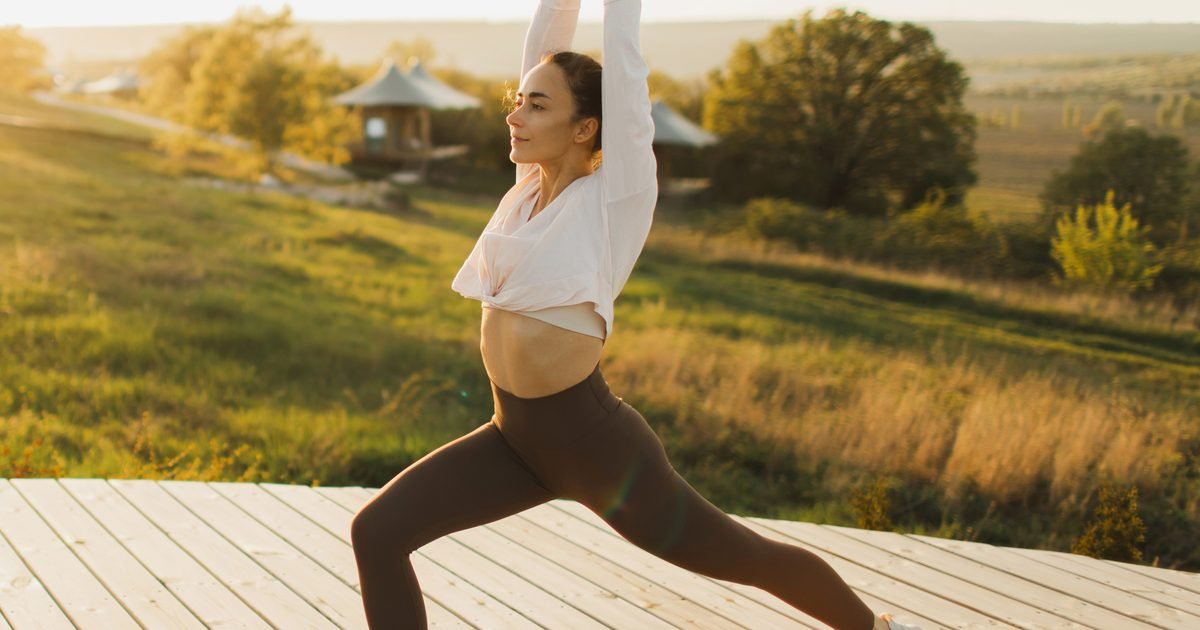
While some people might think that yoga and pilates are just different ways of stretching, this is a misconception. Both focus on controlled movement and mind-body connection, but the techniques and exercises are very different. Pilates is a functional form of movement that builds your core and stability, while yoga focuses on the mind as much as the body. This guide will help you work out which is best for you.
Both yoga and pilates can be performed at home with nothing but your bodyweight, and they can both help you build strength, core stability and mobility throughout the whole body. Neither is better than the other as both forms of movement have huge benefits when practiced long-term.
What is pilates?

Pilates is about learning how to move well, not always pushing yourself harder or to the point of exhaustion, says founder of Exhale Pilates London, Gaby Noble. “Imagine reconnecting to your body in a way that feels both strengthening and restorative at the same time,” she says. “You’re working deeply, but with precision and control, rather than force. It focuses on alignment, breath and developing strength from the inside out – particularly through the core, which supports everything else you do.” Pilates can be performed on a mat with just your body or perhaps some equipment such as sliders, bands and small balls, or, for reformer pilates, on a special piece of equipment which has inbuilt springs to provide resistance.
What is yoga?

Yoga combines physical postures (āsana), breathwork (prāṇāyāma) and meditation to improve both physical and mental wellbeing. “In the West, we have been conditioned to think yoga is just about making complicated, flexible shapes on a rubber mat,” says founder of online yoga studio Unearthed, Angie Tiwari. “But yoga is a 5,000-year-old Vedic practice which unites your mind, body and breath.” You don’t need any equipment for yoga apart from your mat, although it’s sometimes done with blocks and a bolster pillow.
Pilates vs yoga: What’s the main difference?
Invented by Joseph Pilates in the early 1900s, pilates is relatively modern, whereas yoga is an ancient, holistic and spiritual practice. Pilates focuses on physical conditioning, core stability and breath. “It’s rooted in functional movement and often works in a targeted way to correct imbalances and build strength where it’s needed,” Noble says. “While there is a mindful element, the intention is less about flow or spirituality and more about precise, controlled movement patterns that support the body.” This differs from yoga. “In yoga, the physical postures are actually just one tiny fraction of it,” says Tiwari. There are different types of yoga which will offer different challenges too. Vinyasa flow, for example, links postures together using the breath, whereas yin yoga requires holding postures for a few minutes at a time. Both are challenging in different ways.

Which is better: yoga or pilates?
Neither pilates nor yoga is “better”, as such, and both have huge benefits.
The benefits of pilates include better posture, reduced aches and pains and increased strength and stability, particularly in the spine and joints. “It requires focus and coordination,” says Noble, “so it brings you into the present moment, which many people find just as valuable as the physical results.” She recommends pilates to people who want to feel stronger without strain, recover from injury, deal with back pain, pre- and post-natal women, and anyone who wants to feel more connected and capable in their bodies.
One benefit of yoga is “linking breath with movement”. Tiwari says “it also builds profound mental resilience, as well as building strength, improving mobility.” She believes that yoga is useful as a way to pause in a busy world, too.
Although both yoga and pilates are often associated with particular types of people whose bodies already look a certain way, both Noble and Tiwari stress that yoga and pilates are for everyone. “True yoga is inherently inclusive,” Tiwari says. “It doesn’t care what you wear or if you can touch your toes.” Staying consistent with whichever practice you choose is the key to seeing both physical and mental results. “Pilates isn’t a quick fix — it’s a practice,” Noble says. “The results come from consistency and attention, not intensity. But when people stick with it, the changes can be quite profound, not just physically but in how they carry themselves and approach movement altogether.”
Enjoyed this? Read more of our health and fitness guides
The best home gym equipment to buy
Lower ab workout: exercises for a stronger core
10 muscle-building recipes
Best supplements for muscle growth
How long does it take to build muscle?
10 best bulking recipes
All health content on goodfood.com is provided for general information only, and should not be treated as a substitute for the medical advice of your own doctor or any other health care professional. If you have any concerns about your general health, you should contact your local health care provider. See our website terms and conditions for more information.
