


The government will create two organizations as early as July to strengthen the information gathering and analysis capabilities to bolster national intelligence decision-making following the enactment of relevant legislation.
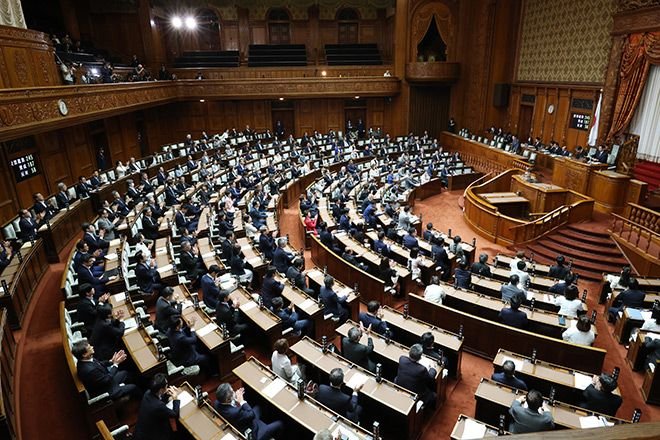
A law to establish a National Intelligence Council as the command center for intelligence activities and a National Intelligence Bureau as its secretariat was approved at an Upper House plenary session on May 27.
It passed the Lower House on April 23.
The government is also expected to formulate a National Intelligence Strategy, which will serve as a medium- to long-term guideline for intelligence activities, by the end of the year.
Chaired by the prime minister, the National Intelligence Council will be composed of Cabinet ministers, including the chief Cabinet secretary, the foreign minister and the defense minister.
It will investigate and deliberate on “important intelligence activities” for national security and counterterrorism and on “foreign intelligence activities” related to espionage by other countries.
The National Intelligence Bureau, staffed by bureaucrats, will handle day-to-day operations.
It will be vested with overarching coordination authority to enable more forceful consolidation and analysis of intelligence spanning ministries and agencies.
In Diet deliberations, Prime Minister Sanae Takaichi has maintained that the National Intelligence Council will allow the government to “maximize and optimize” intelligence activities.
She stated that the National Intelligence Bureau will enhance the capacity to consolidate information and conduct comprehensive analysis by breaking “bureaucratic silos” among ministries and agencies.
The prime minister said the new centralized bureau will provide a greater volume of higher-quality information for policy decision-making.
Still, critics point out that mechanisms for reporting to the Diet and for oversight by an independent third-party body over the operation of the two organizations are insufficient.
In addition, both ruling and opposition parties repeatedly stressed that the top post of the National Intelligence Bureau must not be reserved for any ministry or agency.
The concern stems from the fact that the Cabinet Intelligence and Research Office, the bureau’s predecessor, has consistently been headed by officials from the National Police Agency.
To avoid concentrating power in any ministry or agency, political leadership is seen as indispensable.
One observer believes that the Japanese government has limited experience in making policy decisions fully utilizing intelligence.
A person with experience in the government’s intelligence apparatus recalled that when faced with major diplomatic or national security decisions, the instructions given on what kind of intelligence to gather “depended largely on the prime minister’s personal attributes.”
