



A South Korean animal study has uncovered how the gut directs the brain to seek out essential nutrients and detects protein deficiency. It discovered a gut-brain signaling system that quickly changes feeding behavior through coordinated neuronal and hormonal pathways.
The authors state that, although animals are known to seek out foods rich in protein, the biological mechanisms linking nutrient deficiency to selective feeding behavior are not well understood.
The findings demonstrate that animals do not simply eat more when nutrients are lacking, but that the brain selectively adjusts the eating priorities to seek out and favor the nutrients that are deficient.
The study was led by director Seong-Bae Suh of the Center for Microbiome–Body–Brain Physiology within the Institute for Basic Science, and in collaboration with researchers at Seoul National University and Ewha Womans University.

Through two coordinated pathways, the gut responds to protein deficiency, the research team found. A fast neural circuit informs the brain that essential amino acids are lacking, and a slow hormonal signal encourages protein-seeking behavior over time.
“Our study shows that the gut is not simply a digestive organ, but an active sensory system that continuously monitors nutritional state and directly guides behavioral decisions,” says Suh.
Influenced by the gut
The study, published in Science, started by studying fruit flies by using neural circuits that control feeding. The researchers used generic tools, behavioral experiments, and neural imaging, and could therefore identify the underlying neural circuitry.
They observed that when the flies were protein-derived, gut cells produced the peptide hormone CNMa (CNMamide). This activates enteric neurons associated with the gut, quickly passing along information of amino acid deficiency to the brain via a gut-brain neural circuit.
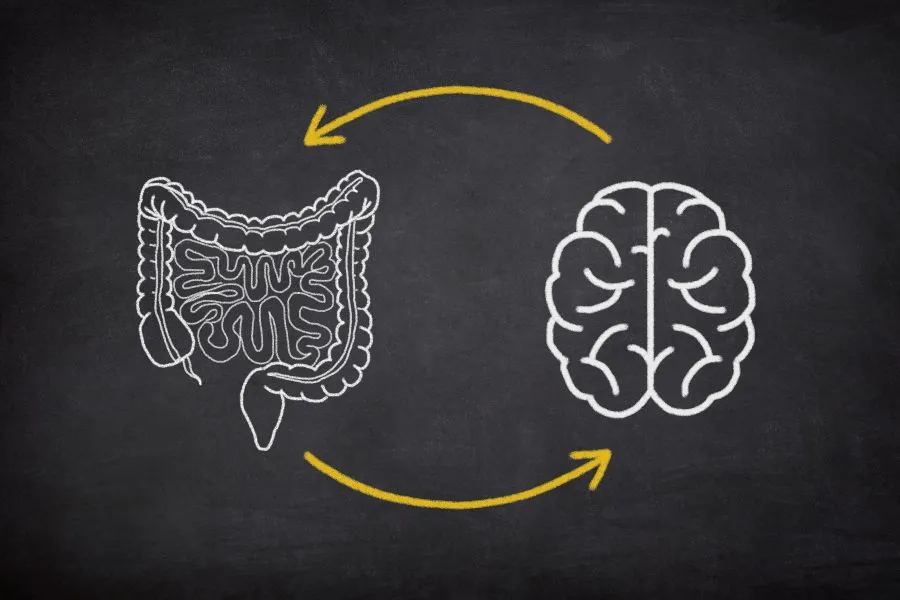 The peptide signaling also restrained activity in DH44, the sugar-sensing neurons, which made the animals seek out protein rather than sugar and carbohydrates.CNMa also enters circulation as a hormone, meaning it reaches the brain more slowly, and encourages appetite for essential amino acids over time, the researchers explain. This means that appetite itself was not increased, but created changes in dietary preferences.
The peptide signaling also restrained activity in DH44, the sugar-sensing neurons, which made the animals seek out protein rather than sugar and carbohydrates.
This circuit was found to be influenced by the gut microbiota, as the flies lacking commensal gut bacteria had a stronger activation of the amino-acid-seeking brain neurons.
In mammals, the researchers also found this mechanism “evolutionarily conserved,” and similar experiments on mice have found that they also seek out essential amino acids when protein-deprived.
Nutritional balance during obesity
The research team argues that the findings may open up new opportunities for research on obesity, metabolic health, and eating disorders.
A prior study found that stress from life circumstances can disrupt the brain-gut-microbiome balance. This could ultimately alter mood, decision-making, and hunger signals — increasing the likelihood of cravings and consuming high-calorie foods. Another found that adults with a disrupted gut-brain interaction are more likely to have restricted food intake disorders.
Nutrition solutions focusing on the gut-brain axis and supporting GLP-1 medications are also rapidly increasing in popularity.
Suh says: “Most current obesity and appetite-control drugs rely on gut hormone signaling, yet we still know relatively little about how naturally produced gut signals influence the brain and behavior.”
“This study reveals fundamental principles of nutrient selection by the gut-brain axis and provides a foundation for future therapeutic strategies targeting metabolic and feeding disorders.”
